
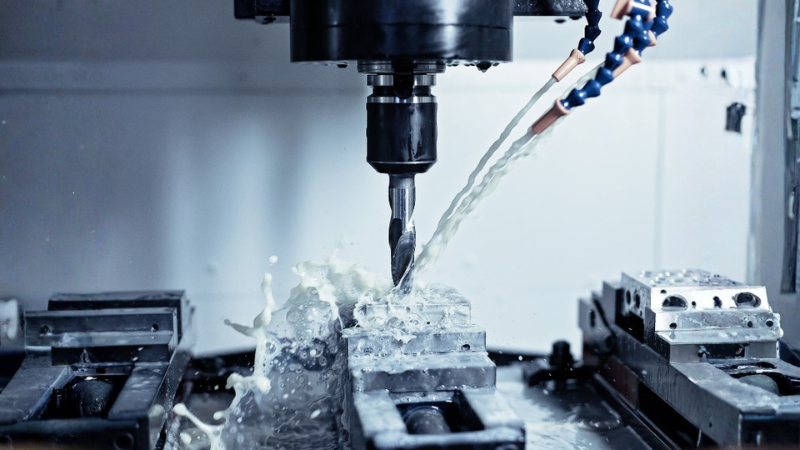
When people talk about rapid prototyping, they often think of 3D printing first. That makes sense for early concept models. But when a prototype needs to be machined from real engineering material, hold tighter dimensions, or behave more like the final part, CNC machining is usually the better fit.
That is where rapid prototyping CNC machining comes in.
It is commonly used during product development when a team needs more than a visual sample. A prototype may need to fit with mating parts, survive handling, go through assembly checks, or be tested under load, heat, or vibration. In those cases, material choice and dimensional stability matter. A printed model may not tell you enough. A machined part usually will.
What Is Rapid Prototyping CNC Machining?
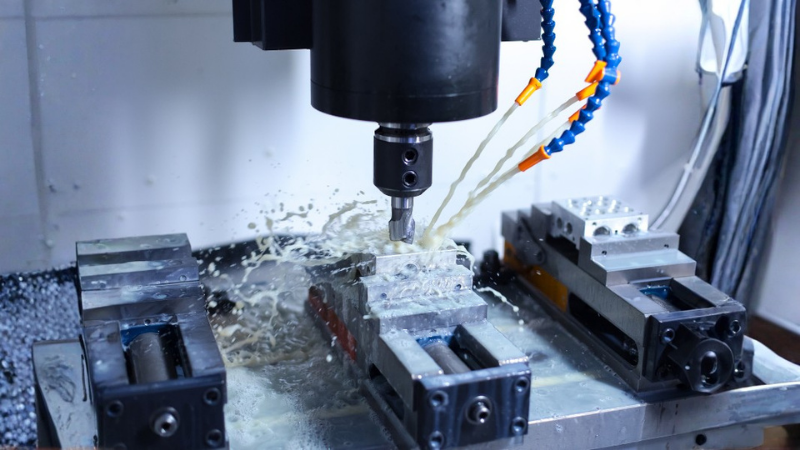
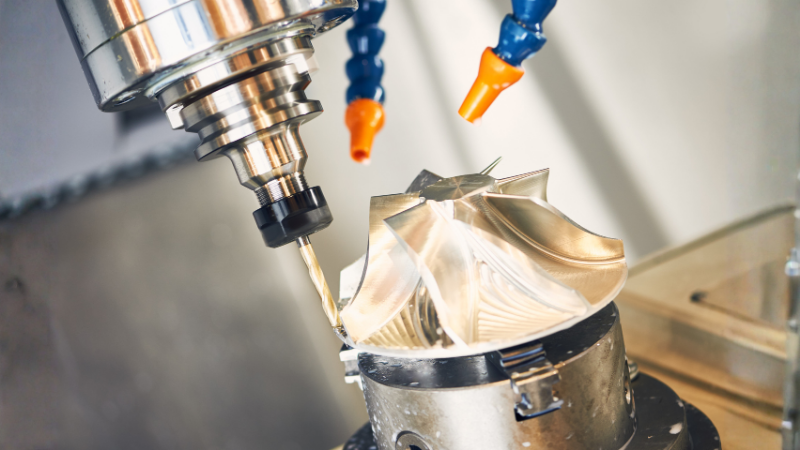
Rapid prototyping CNC machining is the process of making prototype parts directly from CAD data using CNC equipment. Material is cut away from a solid block until the final geometry is reached. Depending on the part, that may involve milling, turning, drilling, tapping, or multi-axis machining.
In simple terms, it is a fast way to get prototype parts that are closer to production reality.
That matters when the goal is not just to see the shape, but to answer practical questions:
- Will the part fit?
- Will the threads hold?
- Does the wall thickness feel right?
- Can the geometry actually be machined?
- Is the chosen material suitable for the application?
Those are the kinds of questions CNC prototypes help solve.
Why Engineers Use CNC for Prototype Parts
The biggest reason is straightforward: CNC prototypes can be made from real materials and checked against real requirements.
Take a mounting bracket as an example. If the part needs to be assembled with screws and used for a real fit test, a CNC-machined prototype is usually more reliable than a 3D printed one. It holds dimensions better, the holes are more accurate, and the part performs closer to the final product.
CNC also makes sense when the prototype includes features that are difficult to judge from a visual model alone. Threads, sealing faces, bearing fits, flat mounting surfaces, and mating details are all easier to evaluate on a machined part.
Another advantage is repeatability. In development, version changes happen quickly. One revision leads to another. With CNC machining, those changes can be controlled more consistently from one iteration to the next, which makes comparison easier and helps reduce guesswork.
How Does CNC Machining Rapid Prototyping Work?
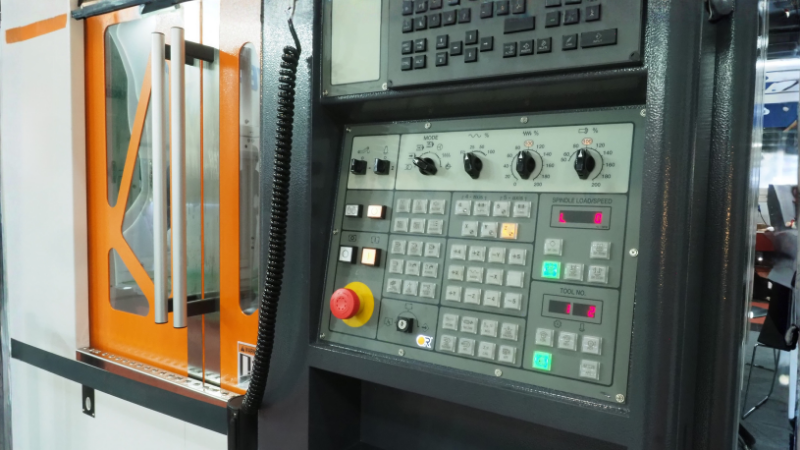
The workflow itself is not complicated, but good prototype results usually depend on what happens before the machine starts cutting.
Step 1 – CAD Model Creation
It begins with a 3D model. Most suppliers will accept common formats such as STEP or IGES. At this stage, the file is reviewed for overall geometry, wall thickness, corner conditions, hole sizes, and anything else that may affect machining.
This is an important step, especially for prototypes. A design can look clean on screen and still be awkward to machine in practice.
Step 2 – DFM Feedback
A good machining supplier will often flag things that are likely to cause trouble, not because the design is wrong, but because some features add cost or delay without improving the prototype.
Typical examples include:
- unnecessarily tight tolerances
- very sharp internal corners
- thin unsupported walls
- deep pockets with difficult tool access
- cosmetic finish requirements that are not needed for testing
This kind of feedback is part of what separates a real manufacturing partner from a quoting platform.
Step 3 – CAM Programming
Once the design is confirmed, the CAM program is prepared and the toolpaths are generated. Then the material is loaded, the setups are planned, and the part is machined.
Simple parts can often move through this stage quickly. More complex parts may require several setups, longer tools, or multi-axis machining, which adds time.
Step 4 – Post-Processing and Inspection
Once machining is complete, the part is deburred and finished as required. Depending on the application, this may include polishing, bead blasting, anodizing, plating, painting, or other secondary operations.
Inspection is performed in line with the customer’s drawings and specifications. We check the required dimensions, tolerances, surface requirements, and other defined features to make sure the prototype is produced as requested. When needed, measurement reports and additional quality documentation can also be provided.
CNC Machining vs 3D Printing for Prototypes
| Feature/Aspect | CNC Prototyping | 3D Printing |
| Material Strength | Very high – production-grade metals & plastics; suitable for stress, heat, and wear testing | Moderate – depends on printing method; weaker under mechanical loads |
| Surface Finish | Excellent – smooth, polished, and precise finishes achievable | Often requires post-processing; layer lines visible |
| Material Options | Wide – metals (aluminum, steel, titanium), plastics (ABS, PEEK, nylon), composites | Limited – mostly polymers, resins, some metals with advanced printers |
| Speed | Fast for functional prototypes (1–5 days typical lead time) | Very fast for simple shapes; slower for large or complex builds |
Both CNC machining and 3D printing are useful in product development, but they solve different problems.
3D printing can be useful for early design validation, but published accuracy data vary significantly by process. For prototypes that require tighter tolerances, more reliable hole positions, and production-like fit, CNC machining is usually the safer choice.
A simple way to decide is this:
- choose CNC machining when performance, accuracy, and final-material behavior matter
- choose 3D printing when speed of concept iteration and geometric freedom matter more
In many real projects, both processes are used at different stages rather than treated as direct competitors.
Choosing the Right Material for CNC Prototypes
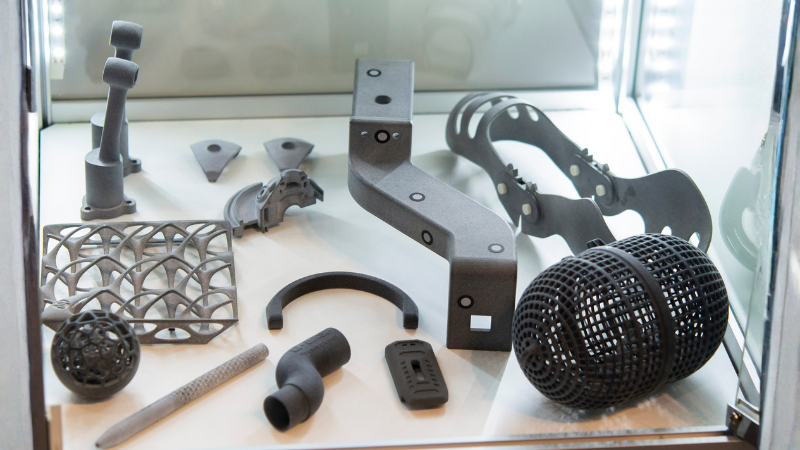
The right material depends on what the prototype is meant to test.
A part for simple fit checking does not always need the same material as one used for load, wear, or heat testing.
Aluminum
Aluminum is often the first choice for CNC prototypes. It machines efficiently, helps keep lead times short, and works well for many brackets, housings, and structural parts.
Stainless Steel
Stainless steel is a better option when higher strength, wear resistance, or corrosion resistance is needed. It is often used for industrial, medical, and demanding mechanical applications.
POM and Nylon
For plastic prototype parts, POM and nylon are both common choices. POM is often used where dimensional stability and low friction matter, while nylon is suitable for functional parts that need toughness and wear resistance.
Brass and Copper
Brass is often selected when machinability and appearance both matter. Copper is more suitable for parts that require good electrical or thermal conductivity.
In many cases, the best prototype material is not simply the final production material. It is the material that helps the team verify the most important design and performance requirements at the current stage of development.
Lead Time for CNC Rapid Prototyping
Typical Timelines
- Simple parts: Usually completed within 1–5 days. These are straightforward designs with minimal machining and finishing requirements.
- Complex parts: More intricate geometries, multi-axis machining, or specialized materials can extend lead times to 7–14 days.
Lead time depends heavily on part complexity, material choice, finishing processes, and production volume.
Factors Affecting Lead Time
- Part Complexity: Multi-axis machining, tight tolerances, or intricate geometries require more programming and machining time.
- Material: Softer materials like aluminum or ABS are faster to machine. Harder materials like stainless steel or titanium increase machining time due to tool wear and slower cutting speeds.
- Quantity: Single prototypes can be produced quickly, but small batch runs (bridge manufacturing) extend lead times.
- Finishing Processes: Post-processing steps such as polishing, anodizing, painting, or heat treatment add time. Finishing can account for 15–20% of total lead time in CNC prototyping.
What Affects CNC Prototype Cost?
Buyers often focus on unit price, but prototype cost is influenced by several linked factors:
- material type and size
- number of setups
- machining time
- tool accessibility
- tolerance requirements
- surface finishing
- inspection level
- order quantity
In many cases, the fastest way to reduce prototype cost is not changing suppliers. It is improving the part for manufacturability. Even a small design change can reduce setup time, simplify machining, and lower both cost and lead time.
FAQs
- What is rapid CNC machining?
Rapid CNC machining is the process of quickly producing prototypes or small-batch parts using Computer Numerical Control (CNC) machines. It combines speed with precision.
- How fast can CNC prototypes be produced?
Simple parts typically take 1–5 days. Complex parts usually require 7–14 days, depending on geometry, material, and finishing.
- Is CNC machining better than 3D printing for prototypes?
It depends on the application. CNC machining is the best for functional prototypes requiring strength, durability, and precision. 3D printing seems better for concept validation and complex geometries.
- What affects prototype lead time the most?
The biggest factors are part geometry, material, tolerance requirements, number of setups, finishing, and inspection scope.
- How accurate are CNC prototypes?
CNC machining delivers exceptional precision, with tolerances as tight as ±0.01 mm. Such an accuracy ensures prototypes are nearly identical to final production parts.
Conclusion
Rapid prototyping CNC machining is one of the most effective ways to move from design to functional validation with confidence. It gives engineering teams a practical way to test real materials, control critical dimensions, improve designs, and reduce risk before production.
For buyers, the value of CNC prototyping is not only speed. It is the ability to make better decisions earlier. When supported by good DFM feedback, stable machining capability, and reliable inspection, CNC rapid prototyping becomes more than a machining service. It becomes a key part of product development and production planning.
Ready to turn your design into a functional prototype?
At Honjenny, we help customers move from CAD files to high-precision CNC prototypes with reliable quality, practical engineering support, and fast response. If you are looking for a trusted manufacturing partner for rapid prototyping CNC machining, send us your drawings or project requirements today and request a quote.