
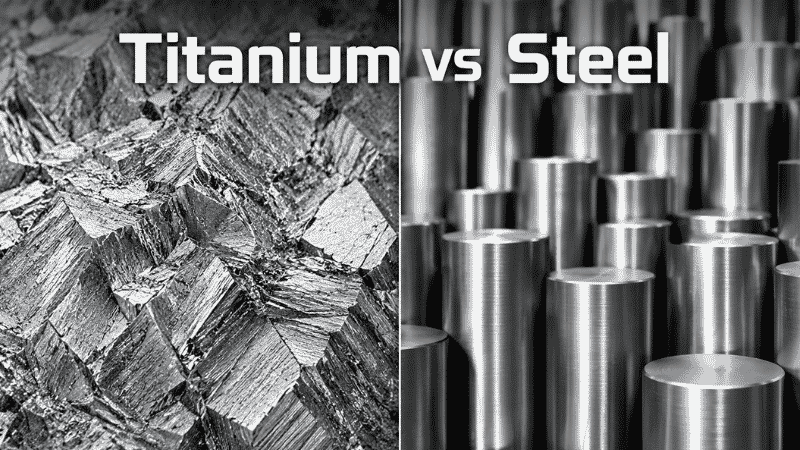
The titanium vs steel comparison cannot be reduced to deciding which metal is stronger. Titanium is lighter and highly corrosion-resistant, while steel is usually stiffer, easier to process, and more economical.
In Honjenny projects, customers sometimes specify either material when aluminum can meet the actual requirements. This guide explains how weight, strength, hardness, environment, and production cost should influence your choice.
Titanium vs Steel: Quick Comparison
Titanium is generally the better choice when low weight, corrosion resistance, or biocompatibility is essential. Steel is usually more practical when a part needs high stiffness, wear resistance, broad material availability, or lower production costs.
Neither metal is stronger in every situation. Some titanium alloys are stronger than common stainless steels, but heat-treated alloy steels can exceed titanium in absolute strength. Titanium’s main advantage is its ability to provide high strength at much lower weight.
The table below uses annealed Ti-6Al-4V and annealed 316L stainless steel as representative examples. Other grades and heat treatments will produce different results.
These representative values come from TIMET’s Ti-6Al-4V technical data and published 316L material data.
What Are Titanium and Steel?
What Is Titanium?
Titanium is available as commercially pure metal and in different alloy grades. Grade 2 is commonly selected for corrosion resistance and formability, while Ti-6Al-4V, also known as Grade 5 or TC4, provides higher strength.
Titanium is widely used in aerospace, marine equipment, medical products, and other applications where weight or corrosion matters. Its main limitations are its high material price and demanding manufacturing requirements.
What Is Steel?
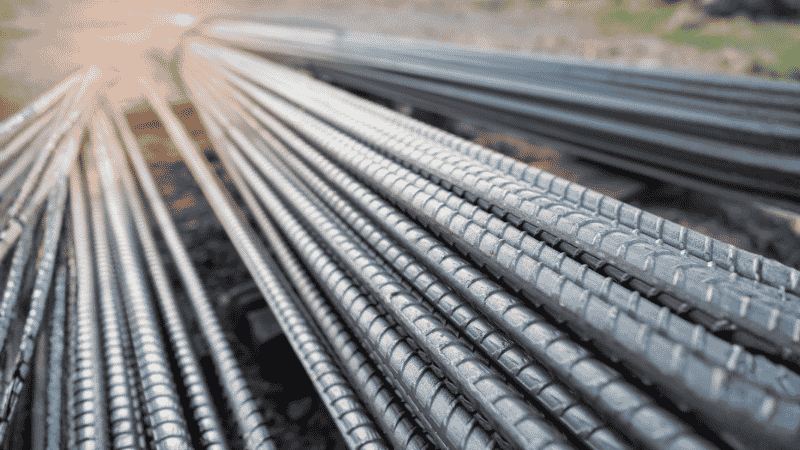
Steel is a family of iron-based alloys. Carbon steel, alloy steel, tool steel, and stainless steel can have very different strength, hardness, corrosion resistance, and machinability.
For example, 304 and 316L stainless steels are commonly selected when corrosion resistance matters. Grades such as 4140 alloy steel can be heat-treated when higher strength and wear resistance are required. A useful comparison should therefore identify the actual titanium and steel grades being considered.
Key Differences Between Titanium and Steel
Is Titanium Lighter Than Steel?
Yes. Titanium has a density of about 4.5 g/cm³, while most steels are close to 7.8–8.0 g/cm³. For parts with the same shape and dimensions, titanium is approximately 40–45% lighter than steel.
This difference matters in aircraft, portable equipment, robotic arms, and moving assemblies. Lower moving mass can reduce inertia or allow a machine to carry a larger useful load.
Weight reduction does not benefit every product. Replacing steel with titanium in a static machine base, for example, may increase cost without improving the function of the equipment.
What Is Stronger: Titanium or Steel?
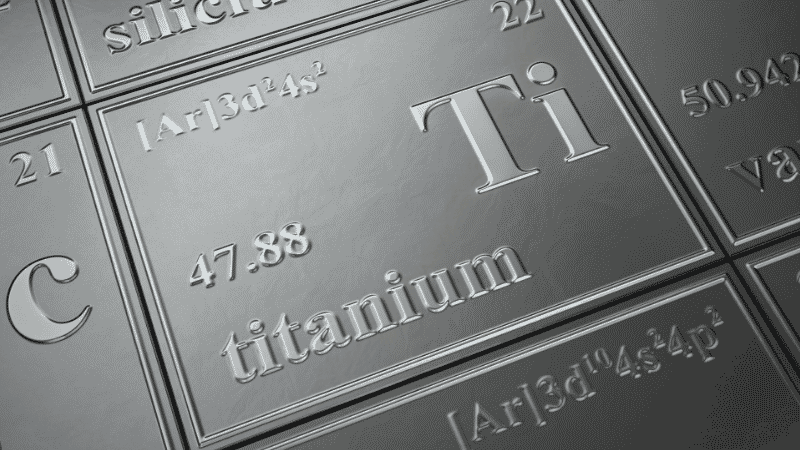
It depends on the specific grade and heat treatment. Ti-6Al-4V is stronger than common annealed 304 or 316L stainless steel, but some heat-treated alloy steels can provide higher absolute tensile and yield strength.
Titanium performs best when a part must combine strength with low weight. This is why titanium is often selected for aerospace structures and other moving components.
If weight is not an important limitation, steel may meet the required strength at a much lower material and production cost. The material name alone is not enough to determine which one is stronger.
Is Titanium Harder Than Steel?
Not always. Hardness depends on the specific alloy and heat treatment. Ti-6Al-4V can be harder than annealed 304 or 316L, but hardened alloy and tool steels can reach much higher hardness levels.
Steel generally performs better on abrasive, sliding, or repeated-contact surfaces. Titanium can experience galling at threads and mating surfaces, especially when two titanium surfaces move against each other. Lubrication, inserts, coatings, or different mating materials may be required.
Hardness should not be confused with stiffness. Steel is generally stiffer than titanium, which means a steel part with the same geometry usually bends or deflects less under the same load. A titanium design may need thicker walls or reinforcing ribs to reach the required rigidity, reducing part of its weight advantage.
Which Metal Has Better Corrosion Resistance?
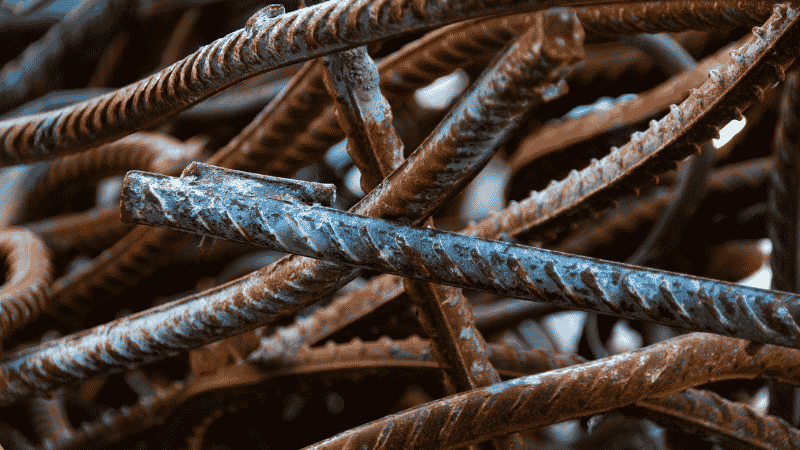
Titanium forms a thin protective oxide layer when exposed to oxygen. This layer gives it strong resistance to seawater and many chemical environments.
Stainless steel also relies on a protective surface film, but its performance depends on the grade and service conditions. For example, 316L usually handles chloride exposure better than 304, but it can still experience pitting or crevice corrosion in demanding environments.
For ordinary indoor equipment, stainless steel may provide enough corrosion protection at a lower cost. For marine or chemical components, compare the actual fluid, concentration, temperature, and exposure time. ATI’s corrosion-resistant titanium guide provides environment-specific information.
Which Metal Performs Better at High Temperatures?
Titanium has a higher melting point than many steels, but melting point does not define a part’s safe working temperature. Strength loss, oxidation, and creep may limit the material long before it begins to melt.
The result also depends on the grade. Some titanium alloys retain useful strength at elevated temperatures, while certain stainless and heat-resistant steels are designed for prolonged high-temperature service.
For high-temperature parts, use performance data for the selected grade and operating condition. A material that survives a short thermal cycle may not be suitable for continuous loading at the same temperature.
Which Metal Costs More to Machine?
Titanium usually costs more to machine than steel. Its low thermal conductivity keeps cutting heat near the tool edge, so manufacturers must use carefully controlled cutting speeds, stable feeds, rigid setups, sharp tools, and effective coolant delivery.
Steel is generally easier and less expensive to process, although 304, 316, hardened steel, and tool steel can still present machining difficulties.
Raw material is only one part of the final cost. Cycle time, tool consumption, scrap risk, finishing, and inspection can make a titanium component much more expensive than a steel component with similar geometry.
What Customers Often Underestimate About Machining
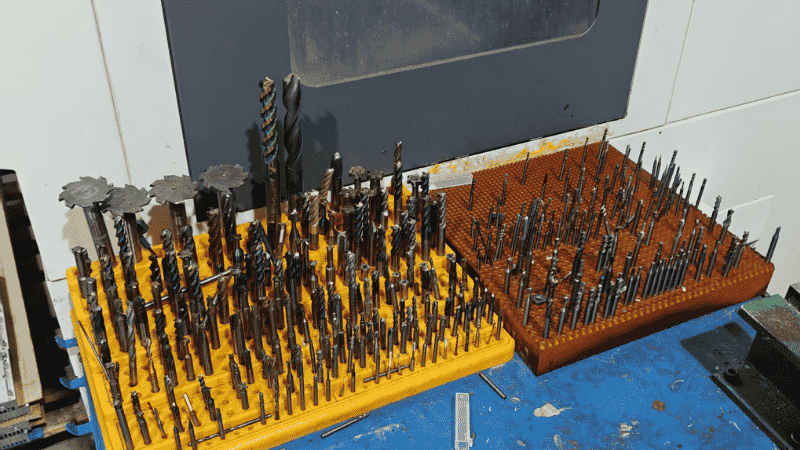
In Honjenny’s workshop, 304 and 316 stainless steel parts often require more tool control than customers expect. The material can work-harden when a cutting tool rubs against the surface instead of removing a stable chip. On some stainless steel projects, tool consumption has been four to five times that of comparable aluminum parts.
Thin stainless steel parts create another problem. A part may meet its dimensions after rough machining and then warp as internal stress is released. Separate roughing and finishing operations, controlled clamping, or stress relief may be necessary.
Dense patterns of M3 and M4 tapped holes also increase production risk. Stainless steel tends to adhere to the cutting tool and can be difficult to clear from a small hole. If a tap breaks inside the part, the entire component may need to be scrapped.
Titanium presents a different challenge. Heat remains concentrated around the cutting edge, while thin walls and ribs can move away from the tool and spring back after cutting. The result may be rapid tool wear, oversize features, or visible vibration marks. Sandvik Coromant’s titanium machining guidance also emphasizes titanium’s narrow machining window.
For comparable parts in our workshop, titanium machining efficiency can fall to about one-fifth of aluminum machining efficiency. Depending on geometry, tolerance, finish, and order volume, the machining charge can reach five to eight times that of aluminum. These figures describe our project experience rather than a fixed multiplier for every component.
When Neither Titanium nor Steel Is Necessary
The most expensive material is not automatically the safest. Before specifying titanium or steel, check the load, environment, annual quantity, and value created by any weight reduction.
Case 1: 304 Robot Gripper Base
A customer specified solid 304 stainless steel for a palm-sized robot gripper base. The part mainly carried static positioning loads, but the customer chose stainless steel because the workshop was humid and the gripper handled workpieces weighing tens of kilograms.
Annual demand exceeded 8,000 parts, while machining the base from solid stock used less than 30% of the original material. After reviewing the load, Honjenny proposed ADC12 die-cast aluminum with a validated hard-anodizing specification.
The prototype passed the required load and corrosion tests. Compared with the original stainless steel design, part weight fell by about 60%, total unit cost fell by 45%, and lead time was reduced by roughly half.
Case 2: TC4 Portable Equipment Housing
Another customer specified CNC-machined TC4 titanium for a small outdoor equipment housing. Titanium provided the expected durability and low weight, but its machining cost was five to six times that of the aluminum alternative.
We proposed a high-strength die-cast aluminum housing with hard anodizing. The revised part added only slightly more than ten grams, while the quoted unit cost dropped from several hundred RMB to tens of RMB.
Titanium could meet the technical requirements, but its additional performance did not create enough value to justify the production cost.
How to Choose Between Titanium and Steel
Choose titanium when:
- Every gram affects product or system performance.
- The part faces seawater or a demanding chemical environment.
- Biocompatibility is required.
- The performance benefit justifies higher material and machining costs.
Choose steel when:
- The part needs high stiffness, hardness, or wear resistance.
- Weight is not a major limitation.
- The project is cost-sensitive or requires larger production volumes.
- You need broad material, grade, and processing availability.
Also compare aluminum or zinc die casting when the load is moderate and annual volume can justify tooling. Before volume production, test the leading option for load, deformation, corrosion, surface finish, and assembly fit.
Conclusion
Titanium is usually the better choice when low weight and corrosion resistance create a clear functional benefit. Steel is generally more practical when stiffness, wear resistance, material availability, and cost matter more.
The correct decision should come from the part’s actual requirements, not from assuming that a heavier or more expensive metal must be more reliable.
Get a Material-Specific Quote From Honjenny
Honjenny manufactures CNC-machined and die-cast metal parts and can review your drawing, operating environment, tolerances, and annual volume. Send us your 2D or 3D files to compare titanium, steel, aluminum, or zinc options and get a quote based on the complete part requirements.