
4-拷贝1-1024x576.jpg)
In aluminum die casting sourcing, many companies focus on price first. However, what usually determines whether a project succeeds is not the quotation itself, but the supplier’s process capability, quality consistency, tooling development capability, and delivery reliability.
An excellent aluminum die casting manufacturer does more than simply produce the part. It should also be able to ensure dimensional consistency, surface quality, stable mass production, and efficient coordination throughout the follow-up process. So, when choosing an aluminum die casting manufacturer, what should companies focus on most?
What Makes a Good Aluminum Die Casting Manufacturer?
A good aluminum die casting manufacturer is not simply the one with the lowest quotation. The right supplier should be able to meet your requirements in four areas: part feasibility, tooling support, quality assurance, and production scalability.
More importantly, these capabilities should be supported by evidence such as similar project experience, inspection reports, process controls, and relevant certifications.
What You Need to Define Before Selecting a Die Casting Manufacturer
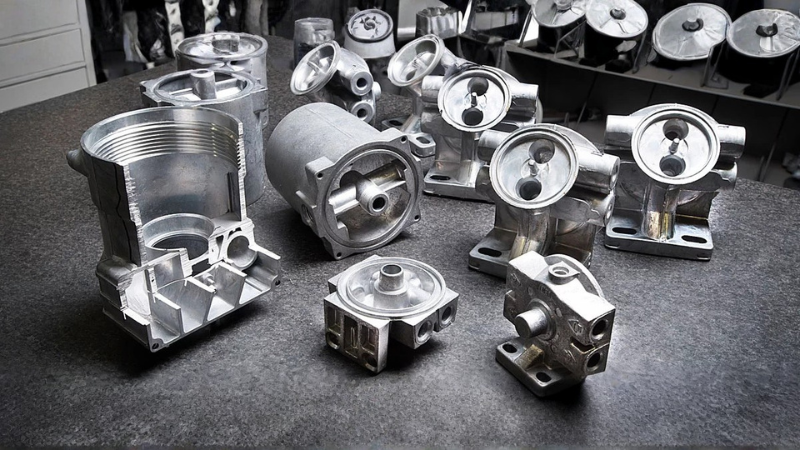
Before comparing suppliers, buyers should define the key project requirements clearly. Part geometry, alloy grade, annual volume, tolerance targets, surface finish expectations, and secondary operations all affect tooling design, process stability, inspection methods, and quotation accuracy.
- Part Size and Geometry
Part size and geometry have a direct impact on die design and process difficulty. Thin walls, deep cavities, undercuts, cosmetic surfaces, and leak-tight features may require more complex tooling, additional slides, better venting design, and tighter process control.
Early DFM discussion helps identify manufacturability risks before tooling is built.
- Alloy Selection
Common die casting alloys such as A380, ADC12, and AlSi9Cu3 are selected based on the part’s performance and manufacturing requirements. Alloy choice can affect fluidity, strength, corrosion resistance, dimensional stability, and machining behavior.
You should confirm that the supplier has stable experience with the specified alloy rather than assuming all die casting factories handle every grade equally well.
- Annual Volume
Annual volume is a key factor in supplier selection. Low-volume projects may require a simpler tooling strategy and more manual production control, while high-volume programs often justify automated cells, multi-cavity dies, and tighter cycle-time optimization.
You should make sure the supplier’s capacity and tooling approach match the expected production scale.
- Secondary Operations
Many die cast parts require secondary operations such as CNC machining, drilling, tapping, surface finishing, or assembly. If these processes are managed by the same supplier.
- Tolerance and Cosmetic Requirements
Tight tolerances increase manufacturing difficulty and cost. When a part also has cosmetic requirements, the supplier must be able to control both dimensional accuracy and surface quality, especially if the part will be painted, coated, or used in a visible application.
- Industry-Specific Requirements
Industry requirements should also be considered. Automotive programs may require IATF 16949, PPAP documentation, and stronger traceability controls. Aerospace projects often demand ISO9100, first article documentation, and strict material traceability. For medical-related components.
You should confirm whether ISO 9001 or additional regulatory requirements apply to the supplier’s actual manufacturing scope.
Evaluate the Supplier’s Technical Capability
4-1024x576.jpg)
Before comparing price, lead time, or certifications, buyers should confirm one basic point: can this supplier consistently produce parts like yours with acceptable dimensional stability, porosity control, and repeatable quality?
- Press Range and Tonnage
Press capacity matters, but buyers should not evaluate a supplier by tonnage alone. The more important question is whether the supplier has produced parts of similar size, wall thickness, and structural complexity on suitable machines with stable results.
- Aluminum Die Casting Specialization
Not all manufacturers specialize in aluminum alloy die casting; some focus on zinc or magnesium. Aluminum exclusively requires higher melting temperatures + distinctive mold designs.
- Part Size Range
Ask whether your supplier routinely produces parts of similar dimensions. Small precision parts demand expertise in micro‑casting, while large structural parts require heavy‑tonnage presses.
- Production Scale
You should evaluate whether the brand can meet your volume, whether 10,000 units or 1 million. A top manufacturer like Honjenny can handle high‑volume aluminum die casting products without defects.
- Experience on Complex Parts
Don’t fall for hollow promises regarding complex geometries. Choose manufacturers with special attention to detail on thin walls, undercuts, or multi‑cavity molds for the casting design.
- Industry and Part-Type Experience
Many customers simply choose the best without looking into their niche products. A supplier familiar with your industry should understand compliance, testing, and cosmetic standards far better.
Check Tooling and DFM Engineering Support
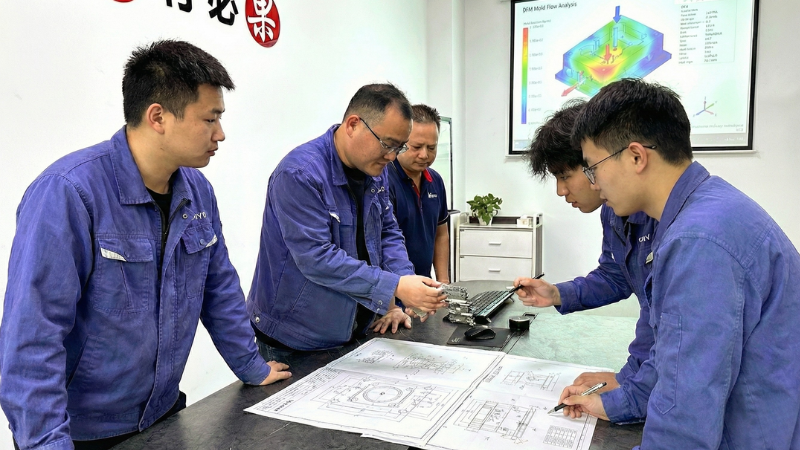
Can the Manufacturer Support Tooling Design or Tooling Transfer?
The best suppliers have teams to collaborate on mold flow analysis, cooling channel design, and gating systems. For an existing die, ask whether the makers can refurbish, adapt, or maintain it.
Do They Offer DFM Feedback Before Production?
DFM feedback helps optimize casting design before steel is cut. Early consultation with the supplier reduces trial‑and‑error, lowers tooling rework costs, and improves part feasibility.
How Do They Manage Tool Maintenance and Tool Life?
Tool life depends on alloy, shot size, and maintenance. Aluminum alloy die casting yields 80,000 – 100,000 shots per tool. Leading suppliers like Honjenny schedule preventive maintenance, track tool wear digitally, and guarantee tool refurbishment.
Review Quality Systems, Certifications, and Process Control

Which Certifications Matter?
- ISO 9001 (General Quality Systems): It embraces structured quality management, documentation, and continuous improvement.
- IATF 16949 (Automotive Programs): It’s mandatory for automotive OEMs and Tier 1 suppliers regarding defect prevention, traceability, and customer-specific requirements.
- Other Specific Certifications: AS9100 is obligatory for aerospace components. You’re to check ISO 13485 for medical devices.
Process Control and Monitoring
- Simulation and Imaging: Mold-flow analysis and thermal simulations reduce the risk of casting porosity and dimensional instability.
- Process Monitoring: Real-time sensors track shot velocity, metal temperature, and cooling rates.
Nondestructive Testing (NDT)
Porosity is one of the most common aluminum die casting defects, requiring tests. Nondestructive methods like X-ray, ultrasonic, and dye penetrant inspection can detect such internal flaws.
One-stop service capability
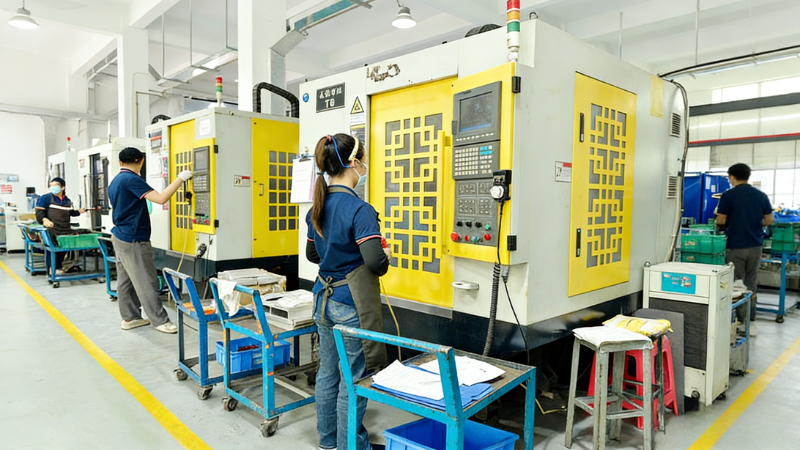
Die castings rarely come out of the mold ready for final use. Most aluminum die casting products require secondary operations such as CNC machining, surface finishing, drilling, or assembly.
- CNC Machining: Tight tolerances and precision holes prevail for the component.
- Finishing: Powder coating, anodizing, or polishing for corrosion resistance and aesthetics.
- Assembly: Integration of multiple aluminum die casting parts into subassemblies.
Leading suppliers highlight them as they reduce handoffs, minimize lead-time risk, and eliminate accountability gaps. Ask whether your supplier provides a full suite of post-cast services.
Can the Supplier Provide Samples, References, or Case Studies?
Smart and cautious buyers want proof instead of promises. That’s why top brands showcase portfolios, case studies, and demo parts. Samples demonstrate capability in design, finish, and defect control.
- Samples: Reveal cosmetic quality, porosity levels, and dimensional stability.
- References: Offer credibility through past client endorsements.
- Case Studies: Show how the supplier solved challenges in similar industries.
International buyers rank global supplier case studies as a top factor in trust-building. Always request samples or case studies, especially for parts with complex geometry or specific compliance needs.
Can Your Manufacturer Support Prototype to Production?
A supplier that can make prototypes but not scale production is quite risky. Scalability ensures that once your design is validated, the supplier can meet volume demands without compromising quality.
- Prototype Capability: Quick-turn samples for design validation.
- Production Scale: Multiple presses, automation, and high-volume capacity.
- Reshoring: Some highlight domestic facilities to reduce supply chain risk.
You should ask about the press range and the annual volume capacity. Whether the supplier has scaled similar aluminum alloy die casting projects before should be given priority.
Questions to Ask Before You Choose an Aluminum Die Casting Manufacturer
What alloys and part sizes do you handle most often?
Different alloys (A380, ADC12, AlSi9Cu3) have unique properties. A supplier experienced in alloy and part size reduces the risk of porosity and dimensional instability.
Do you design/build tooling in-house or through partners?
In-house tooling design and maintenance shorten lead times and improve accountability. NADCA emphasizes early tooling consultation to prevent defects.
What certifications do you hold?
ISO 9001 for general quality systems, IATF 16949 for automotive, AS9100 for aerospace, and ISO 13485 for medical.
What post-cast services do you offer?
CNC machining, finishing, and assembly reduce handoffs and lead-time risk.
How do you manage tooling maintenance?
Tool life for aluminum die casting parts can exceed 80,000 shots with proper upkeep. Ask about preventive maintenance schedules.
Can you share similar project examples?
Case studies from previous works and references from served clients can prove the capability.
What quality documentation can you support?
PPAP (automotive), FAI (aerospace), or RoHS/REACH compliance (electronics). Documentation ensures traceability and defect control.
Aluminum Die Casting Manufacturer Checklist
- Technical fit – Press range, alloy specialization, part size capability.
- Tooling/DFM support – In-house tooling, NADCA-compliant design, early DFM feedback.
- Quality certifications – ISO 9001, IATF 16949, industry-specific standards.
- Secondary operations – CNC machining, finishing, assembly.
- Sampling/proof – Ability to provide samples, references, and case studies.
- Scalability – Prototype-to-production capacity, multiple presses, automation.
- Communication – Fast, consistent quoting and transparent documentation.
FAQs
- How do I choose an aluminum die casting manufacturer?
Start by defining your specs – part size, alloy, annual volume, tolerances, and finishing needs. Then evaluate the supplier’s technical capability, tooling/DFM support, quality certifications, and scalability.
- What certifications should a die casting supplier have?
ISO 9001 for general quality systems, IATF 16949 for automotive programs, AS9100 for aerospace compliance, and ISO 13485 for medical device manufacturing.
- Should my supplier offer machining and finishing too?
Yes. One‑stop suppliers that provide CNC machining, finishing, and assembly reduce handoffs, lead‑time risk, and accountability gaps. Integrated secondary operations can cut lead times by a fine margin.
- Is in-house tooling important?
Absolutely. In‑house tooling design and maintenance ensure faster iterations, better defect control, and accountability. NADCA’s tooling checklist emphasizes early consultation before the metal is cut.
- What should I send when requesting a quote?
Prepare a complete RFQ package including 2D drawings and 3D CAD files (STEP/IGES), volume projections, target price per part, finish requirements, testing needs, and compliance requirements.
Conclusion
The right aluminum die casting manufacturer is the supplier that can reliably meet your design, tooling, quality, and production requirements. That too should come with proper process controls and support services. That’s why evaluating a supplier beyond price points is essential to succeed in your project.
Let HONEJNNY Prove Its Worth for Your Aluminum Die Casting Needs
As discussed, partnering with the manufacturer is crucial. And at Honjenny, we combine technical expertise, certified quality systems, and one-stop secondary operations to deliver reliable results. Contact us to request a fast quote and/or technical evaluation of your project.