
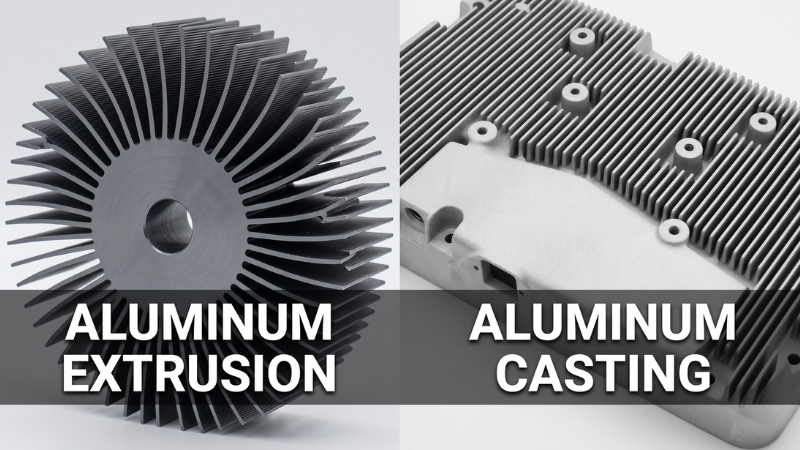
When comparing cast aluminum vs extruded aluminum, the best option depends on your part geometry, strength requirements, production volume, machining needs, and surface finish expectations.
In general, cast aluminum is a better fit for complex 3D parts with integrated features, internal cavities, or non-uniform wall thicknesses. Extruded aluminum is usually the better choice for long parts with a constant cross-section, especially when consistency, structural performance, and efficient downstream machining matter.
If you are deciding between the two, the key is not which material sounds better on paper. The real question is which process makes more sense for your part design, your annual volume, and your total manufacturing cost.
What Is Cast Aluminum?
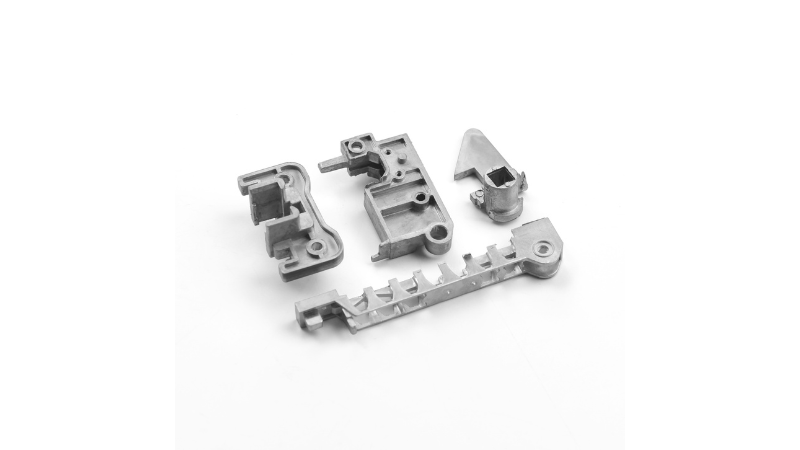
Cast aluminum is produced by pouring or injecting molten aluminum into a mold, where it solidifies into the required shape. Depending on the part requirements, manufacturers may use sand casting, die casting, permanent mold casting, or investment casting.
Casting is commonly used when the part geometry is too complex or too expensive to produce from a profile-based process. It works well for components with internal cavities, irregular forms, integrated bosses, ribs, or thick-to-thin transitions.
Typical advantages of cast aluminum include:
- Good design freedom for complex shapes
- Ability to combine multiple features into one part
- Reduced assembly in some applications
- Suitable options for both prototype and production work, depending on the casting method
Cast aluminum is widely used for housings, pump bodies, valve bodies, motor housings, lighting components, brackets, and automotive parts.
What Is Extruded Aluminum?
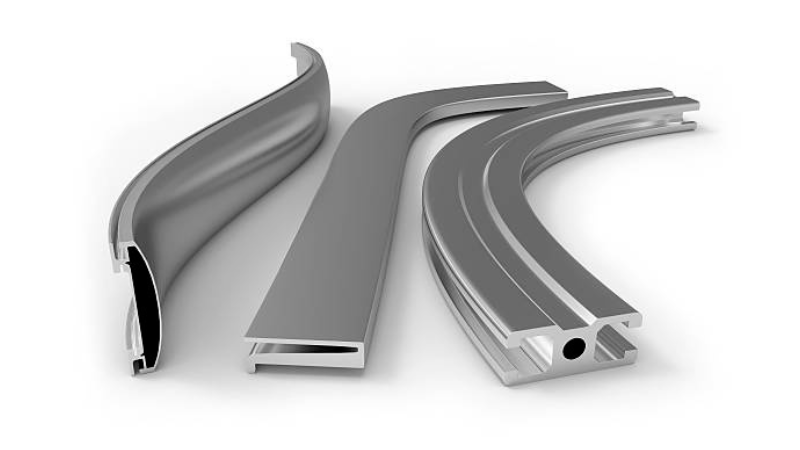
Extruded aluminum is made by heating an aluminum billet and forcing it through a die to create a long profile with a consistent cross-section. After extrusion, the profile can be cut, machined, drilled, milled, bent, welded, or surface-finished depending on the final application.
Extrusion is ideal for parts that are essentially linear in shape. If the profile stays the same along the length of the part, extrusion is often one of the most efficient manufacturing options.
Typical advantages of extruded aluminum include:
- Consistent cross-sections
- Good dimensional repeatability
- Efficient production for long profiles
- Better suitability for frames, rails, enclosures, and heat sinks
- Good compatibility with anodizing, powder coating, and CNC finishing
Extruded aluminum is commonly used for window frames, industrial frames, machine structures, rail systems, heat sinks, solar profiles, and battery enclosure components.
Cast Aluminum vs Extruded Aluminum: 5 Key Differences to Know
1. Part Geometry and Design Freedom
This is usually the first and most important decision factor.
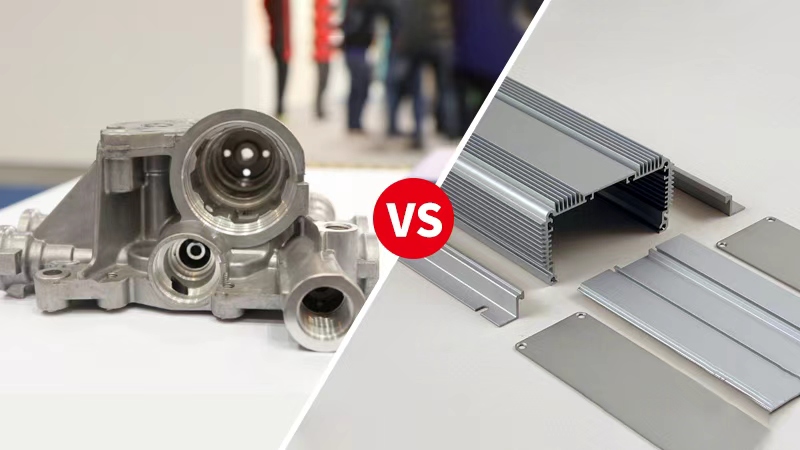
If your part has a complex 3D shape, internal cavities, variable wall thickness, or integrated design features, casting is often the better route. Casting allows more freedom in part shape because the metal fills the mold rather than being limited to a constant profile.
Extrusion, by contrast, is limited to parts with the same cross-section along the length. It is excellent for linear profiles, but it is not suitable for parts that require major geometric variation from one end to the other.
2. Mechanical Properties and Structural Performance
In many common engineering applications, extruded aluminum offers more consistent mechanical properties than standard cast aluminum parts. This is one reason extrusion is widely used for structural profiles and load-bearing frames.
However, this should not be oversimplified. Actual performance depends on the alloy, temper, section design, heat treatment, and the manufacturing route being compared. A well-designed cast aluminum part can still perform very well in the right application.
As a general rule:
- Extruded aluminum is often preferred for structural sections, frames, and applications that require better consistency and mechanical performance
- Cast aluminum is often preferred when shape complexity matters more than maximum structural efficiency
If your application is highly load-sensitive, do not compare the processes in isolation. Compare the specific alloy, geometry, wall thickness, and post-processing plan.
3. Surface Finish and Appearance
Surface finish also differs between the two processes.
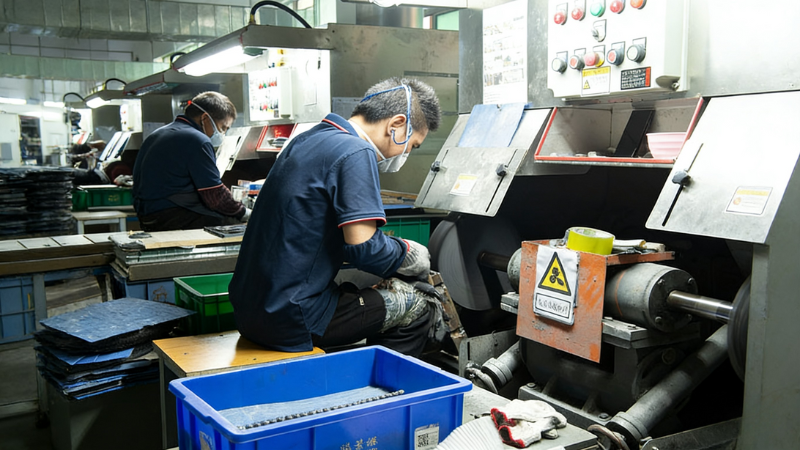
Cast aluminum parts usually require more finishing work, especially if the part is produced by sand casting. Depending on the casting method, secondary machining, grinding, polishing, or coating may be needed to meet appearance or tolerance requirements.
Extruded aluminum typically offers a cleaner and more uniform starting surface, especially for visible profiles and architectural components. It is also well suited to anodizing and powder coating.
That said, not all casting methods produce the same surface quality. For example, die cast parts usually have a better surface finish than sand cast parts. This is why it is important to compare the exact casting route rather than treating all cast aluminum parts as the same.
4. Tooling Cost and Total Part Cost
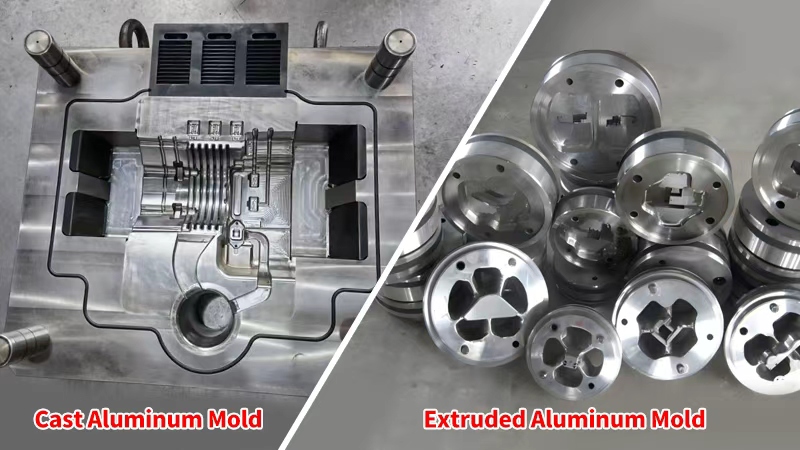
Many buyers focus too much on initial tooling cost and not enough on total part cost.
Casting and extrusion both require tooling, but the economics depend heavily on part shape, annual volume, and the amount of secondary machining required.
Casting may be more practical when:
- The geometry is too complex for extrusion
- Machining a profile into the final shape would create too much waste
- You want to consolidate several features into one part
Extrusion may be more cost-effective when:
- The design already fits a constant profile
- You need large quantities of the same section
- Downstream cutting and machining are relatively simple
The important point is this: the cheaper tooling option is not always the cheaper part overall. A part with low initial tooling cost can still become expensive if machining, finishing, scrap, or assembly costs are high.
5. Production Volume and Process Efficiency
Production volume is another area where buyers often need more context.
It is not accurate to say that cast aluminum is always for low volume and extrusion is always for high volume. Different casting methods serve different production ranges.
For example:
- Sand casting is often suitable for lower-volume production and larger complex parts
- Die casting is often suitable for high-volume production of smaller, more repeatable parts
- Extrusion is highly efficient for repeated production of long profiles with the same cross-section
So the better question is not simply “Which process is better for volume?” The better question is “Which process is better for this geometry at this volume?”
Quick Comparison: Cast Aluminum vs Extruded Aluminum
Common Applications of Cast and Extruded Aluminum
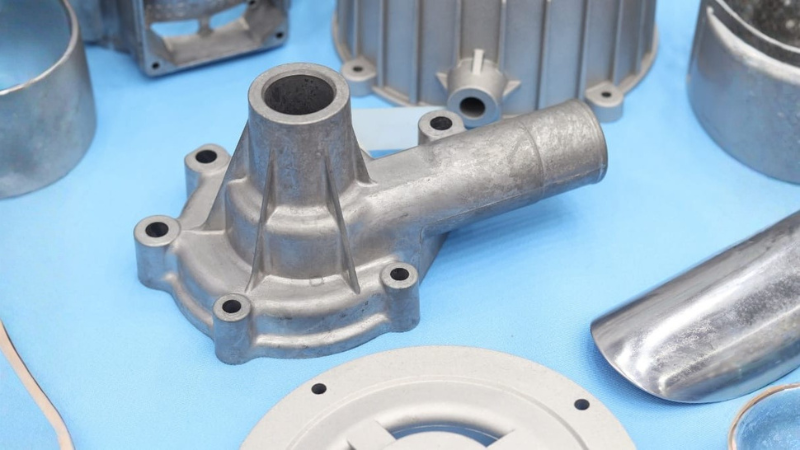
Common Cast Aluminum Applications
- Pump housings
- Motor housings
- Gearbox housings
- Valve bodies
- Lighting housings
- Complex brackets
- Automotive housings and covers
Common Extruded Aluminum Applications
- Window and door frames
- Industrial machine frames
- Linear rails and guides
- Heat sinks
- Solar mounting profiles
- Enclosure frames
- Battery tray structural members
The Final Verdict: Which Is Better for Your Application?
There is no universal winner in the cast aluminum vs extruded aluminum comparison.
Choose cast aluminum if your part needs:
- Complex geometry
- Internal cavities or integrated features
- Non-uniform wall sections
- Reduced assembly through part consolidation
Choose extruded aluminum if your part needs:
- A constant cross-section
- Good dimensional repeatability
- Efficient production of long profiles
- Better suitability for frames, rails, and enclosure structures
If you are still unsure, start with these five questions:
- Is the part shape constant along the full length?
- Is the part structural, decorative, or both?
- What annual volume are you targeting?
- How much machining will be required after forming?
- What surface finish and tolerance level do you need?
These five questions usually make the right direction much clearer.
FAQs
Is extruded aluminum stronger than cast aluminum?
In many structural applications, extruded aluminum provides more consistent mechanical properties than common cast aluminum parts. However, the final result depends on alloy, temper, section design, and post-processing. It is better to compare the exact part design rather than make a general assumption.
When should I choose cast aluminum instead of extrusion?
Choose cast aluminum when your part has complex 3D geometry, internal features, or shape variations that cannot be made efficiently from a constant-profile process.
Is extrusion always cheaper than casting?
No. Extrusion can be very cost-effective when the part design fits a constant cross-section. But if the design requires heavy secondary machining or major profile modification, casting may be the more practical and economical route.
Can both cast aluminum and extruded aluminum be machined?
Yes. Both can be machined. In fact, secondary machining is common in both processes depending on tolerance, hole location, sealing surfaces, and assembly requirements.
Conclusion
When evaluating cast aluminum vs extruded aluminum, the right choice comes down to the relationship between part geometry, performance, production volume, and total manufacturing cost.
Cast aluminum is usually the better choice for complex parts with integrated features and non-linear geometry. Extruded aluminum is usually the better choice for long, profile-based parts that need consistency, efficient production, and reliable downstream processing.
The best decision is not based on a simple material preference. It is based on how well the process fits your actual part.
Need Help Choosing Between Cast and Extruded Aluminum?
If you are comparing processes for a new project, send Honjenny your drawing, estimated annual volume, alloy requirement, and surface finish standard. Our engineering team will review your part and recommend the most practical manufacturing route for performance, manufacturability, and cost. Contact us today to start your inquiry.