
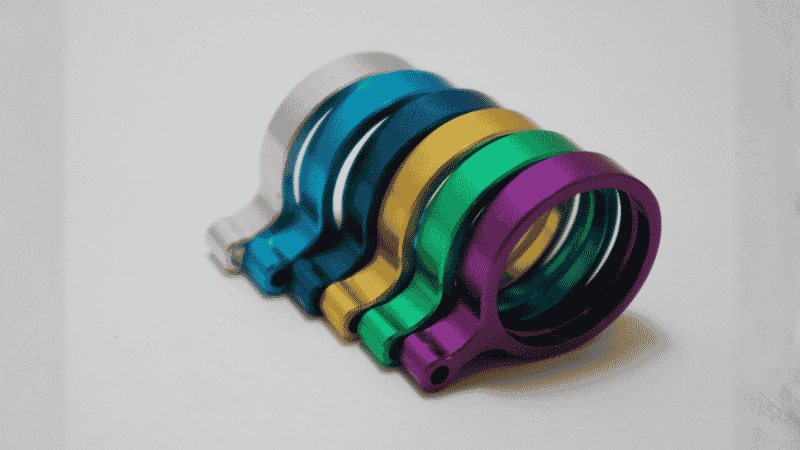
Anodized aluminum colors are widely used in CNC machined parts, aluminum profiles, electronic housings, architectural components, automotive parts, and decorative hardware. Compared with painting or powder coating, anodizing creates a durable oxide layer on the aluminum surface while keeping the natural metallic appearance of the material.
This guide explains what anodized aluminum is, what color aluminum naturally has, what types of anodized aluminum are available, how anodizing creates color, and what factors should be considered when choosing anodized aluminum colors for your project.
What Is Anodized Aluminum?
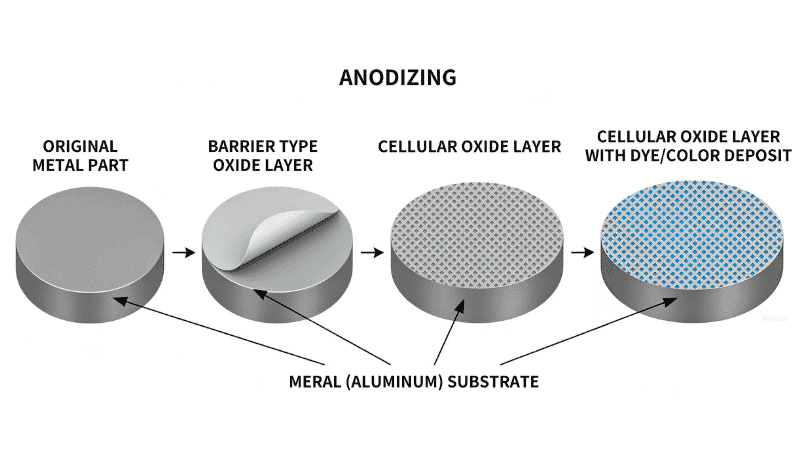
Anodized aluminum is aluminum that has been treated through an electrochemical surface finishing process. During this process, a controlled aluminum oxide layer is formed on the surface of the metal.
This oxide layer is not a separate coating like paint. It becomes part of the aluminum surface, which helps improve corrosion resistance, surface hardness, and wear resistance. Because the anodized layer has tiny pores before sealing, it can also be dyed or colored to create different anodized aluminum colors.
Aluminum Anodizing Color Process
The aluminum anodizing process usually includes surface preparation, anodizing, coloring, sealing, and inspection. Each step affects the final appearance, color consistency, corrosion resistance, and surface performance of the aluminum part.
Surface Preparation
Before anodizing, the aluminum part must be cleaned to remove oil, dust, machining fluids, and surface contaminants. Depending on the required finish, the part may also be etched, polished, brushed, or bead blasted. This step is important because anodizing does not fully cover surface defects. Scratches, tool marks, or uneven textures may still be visible after finishing.
Anodizing
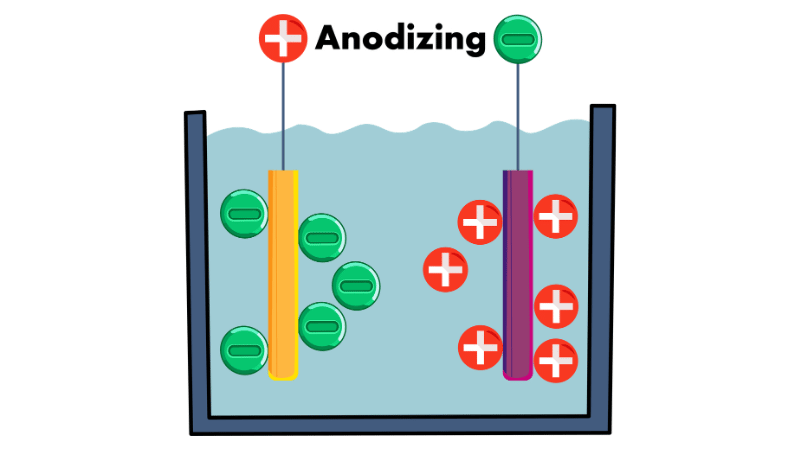
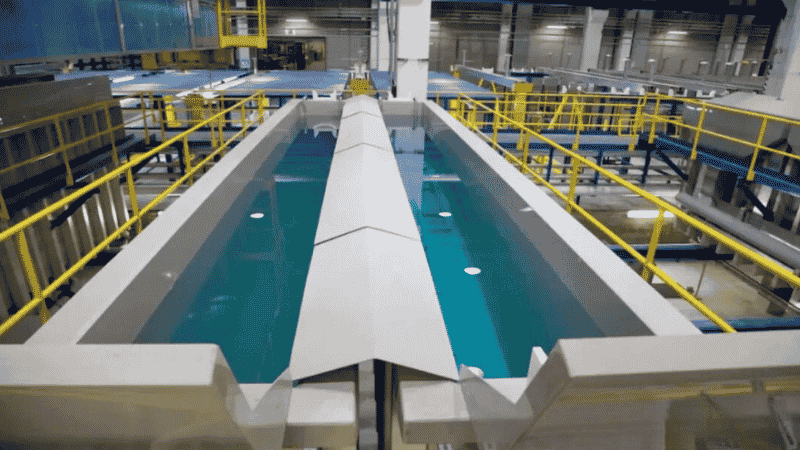
After surface preparation, the aluminum part is placed in an electrolyte bath and connected as the anode. When electric current passes through the solution, a controlled aluminum oxide layer forms on the surface. This oxide layer improves corrosion resistance, surface hardness, and wear resistance.
Coloring
If a colored finish is required, the anodized layer can be dyed or electrolytically colored before sealing. The porous oxide layer absorbs colorants, allowing aluminum to achieve finishes such as black, gold, bronze, red, blue, green, and other anodized aluminum colors.
Sealing
After coloring, the part is sealed to close the pores in the oxide layer. Sealing helps lock in the color and improves corrosion resistance, stain resistance, and long-term durability.
Inspection
The final step is inspection. The anodized aluminum part is checked for color consistency, surface defects, coating quality, and dimensional requirements. For high-appearance parts, approved color samples are often used to control batch-to-batch variation.
What Are the Types of Anodized Aluminum?
Anodized aluminum is commonly divided into different types based on the anodizing process, oxide layer thickness, and final performance requirements. The three main types are Type I, Type II, and Type III anodizing.
Type I Anodized Aluminum
Type I anodizing is also known as chromic acid anodizing. It produces a thin oxide layer and is mainly used when corrosion resistance is needed with minimal dimensional change.
This type is often used in aerospace and precision applications, but it is not the most common choice for decorative anodized aluminum colors. Its color range is more limited compared with sulfuric acid anodizing.
Type II Anodized Aluminum
Type II anodizing is the most common anodizing process for decorative and general-purpose aluminum parts. It is usually done in a sulfuric acid bath and creates a moderate oxide layer on the aluminum surface.
This type is widely used for CNC machined parts, aluminum profiles, electronic housings, hardware, and consumer products. Type II anodizing can be dyed into many colors, including clear, black, gold, red, blue, green, purple, and other custom shades.
If the main goal is to improve appearance, corrosion resistance, and color options, Type II anodizing is usually the preferred choice.
Type III Hard Anodized Aluminum
Type III anodizing is also called hard anodizing. It creates a thicker and harder oxide layer than Type II anodizing, which gives the aluminum surface better wear resistance, corrosion resistance, and durability.
Hard anodized aluminum is often used for mechanical parts, automotive components, aerospace parts, hydraulic components, and other applications where surface performance is more important than decorative appearance.
Because the oxide layer is thicker, Type III anodized aluminum usually appears dark gray, black, bronze, or natural dark tones. Bright colors are more difficult to achieve and control compared with Type II anodizing.
Advantages of Colored Anodized Aluminum
Colored anodized aluminum is widely used because it provides both surface protection and decorative appearance. It is not only a way to add color to aluminum, but also a finishing process that improves the performance of the metal surface.
Metallic Appearance
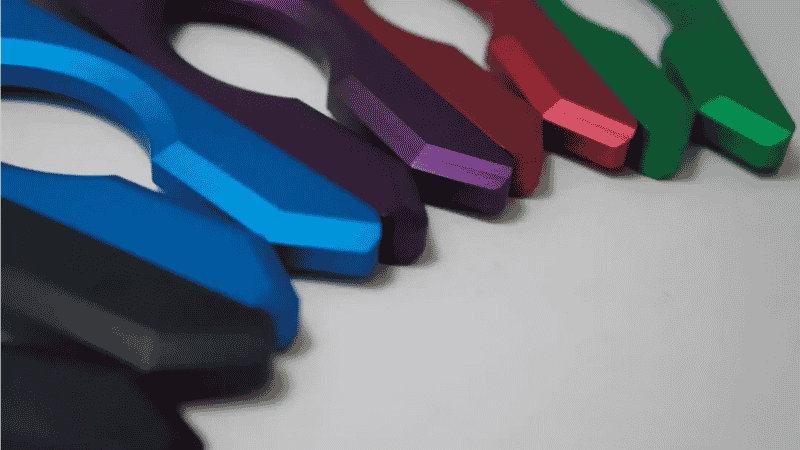
One of the main advantages of colored anodized aluminum is that it keeps the natural metallic look of aluminum. Unlike paint, anodizing does not fully cover the surface with an opaque coating. The final finish can still show the texture of the aluminum, such as brushed, polished, machined, or bead-blasted surfaces.
This makes colored anodized aluminum suitable for products that need a clean, modern, and high-quality appearance, such as electronic housings, CNC parts, decorative hardware, and aluminum profiles.
Improved Corrosion Resistance
The anodized oxide layer helps protect aluminum from moisture, air, and mild environmental exposure. After sealing, the surface becomes more resistant to corrosion and staining than untreated aluminum.
This is especially useful for aluminum parts used in outdoor products, architectural components, machinery, and industrial equipment.
Better Wear Resistance
Anodizing increases the surface hardness of aluminum. This helps reduce surface wear during handling, assembly, or daily use. For parts that require higher wear resistance, hard anodizing can provide a thicker and more durable oxide layer.
Because of this, anodized aluminum is often used for mechanical parts, automotive components, tools, and other parts exposed to friction or repeated contact.
Wide Color Options
Colored anodizing allows aluminum to be finished in many colors, including clear, black, gold, bronze, red, blue, green, purple, and other custom shades. These anodized aluminum colors can help match product design, brand identity, or functional classification.
For example, black anodized aluminum is often used for electronics and mechanical parts, while bronze and champagne anodized finishes are common in architectural aluminum applications.
Strong Surface Bonding
The anodized layer is formed from the aluminum surface itself, rather than being applied as a separate coating. This gives anodized aluminum good surface adhesion and reduces the risk of peeling or flaking.
When the anodizing, coloring, and sealing processes are properly controlled, colored anodized aluminum can provide a stable finish for both decorative and functional applications.
What Factors Affect the Final Color of Anodized Aluminum?
The final color of anodized aluminum is not determined by dye alone. It is affected by the aluminum alloy, surface preparation, anodizing process, oxide layer thickness, coloring method, sealing quality, and production control. Even if two parts are specified with the same anodized color, the final appearance may still be different if these factors are not controlled properly.
Aluminum Alloy
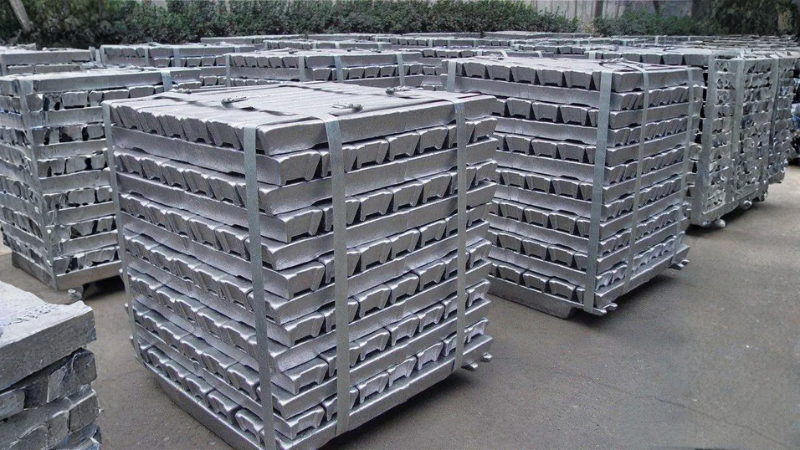
The aluminum alloy has a major influence on the final anodized color. Different alloys contain different levels of magnesium, silicon, copper, zinc, and other elements. These elements affect how the oxide layer forms and how the surface absorbs or reflects color.
For example, 6061 aluminum is commonly used for CNC machined parts and can be anodized in many colors. 6063 aluminum is often used for extruded aluminum profiles and usually provides a more uniform anodized appearance. Cast aluminum alloys or high-silicon aluminum alloys may produce darker, duller, or less consistent colors after anodizing.
Surface Finish
The surface finish before anodizing directly affects the final appearance. A polished surface may create a brighter and more reflective anodized finish, while a brushed surface creates a linear texture. Bead blasting usually produces a matte or satin appearance.
Anodizing does not fully hide surface defects. Scratches, tool marks, stains, dents, or uneven textures may still be visible after anodizing. For this reason, the surface preparation method should be confirmed before choosing anodized aluminum colors.
Oxide Layer Thickness
The thickness of the anodized oxide layer also affects color depth and appearance. A thicker oxide layer can make the color look darker or less transparent. This is one reason why hard anodized aluminum often appears dark gray, black, bronze, or other deep tones.
For precision parts, oxide layer thickness also affects dimensions. Holes, threads, mating surfaces, and tight-tolerance areas may need to be masked or adjusted in the design.
Coloring Method
Different coloring methods create different color effects. Organic dye coloring is commonly used for decorative colors such as black, red, blue, green, gold, and purple. Electrolytic coloring is often used for bronze, champagne, dark brown, and black finishes, especially for architectural aluminum.
The selected coloring method affects color range, durability, UV resistance, cost, and repeatability. Bright decorative colors may be suitable for indoor products, while more stable tones are often preferred for outdoor applications.
Sealing Quality
Sealing is an important step after coloring. It closes the pores in the anodized layer and helps lock the color into the surface. Good sealing improves corrosion resistance, stain resistance, and long-term color stability.
If sealing is not properly controlled, the anodized aluminum surface may be more likely to fade, stain, or lose corrosion resistance over time.
Batch-to-Batch Variation
Color variation can occur between different production batches. Even when the same alloy, color name, and anodizing process are used, small differences in material batch, surface preparation, bath condition, temperature, processing time, dye concentration, and sealing can affect the final color.
For visible components assembled together, it is better to anodize them in the same batch whenever possible. For high-appearance products, an approved physical sample should be used as the color reference.
Factors to Consider When Choosing Anodized Aluminum Colors
Choosing anodized aluminum colors should not be based only on appearance. The right color should match the product design, application environment, material, surface finish, durability requirements, and production conditions.
Application Environment
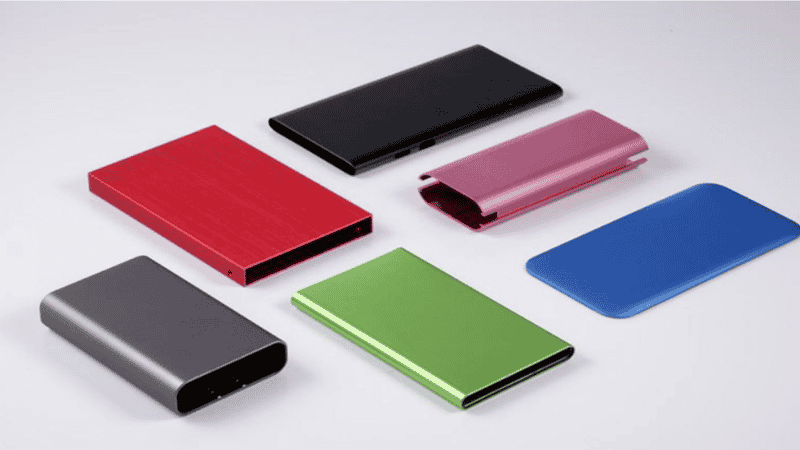
The first factor to consider is where the aluminum part will be used. For indoor products, decorative colors such as black, silver, gold, red, blue, or green may be suitable. These colors are commonly used for electronics, consumer products, CNC parts, and hardware.
For outdoor applications, color stability and weather resistance are more important. Clear, champagne, bronze, dark brown, and black anodized finishes are often used for architectural profiles, window frames, curtain walls, and exterior aluminum components.
Functional Requirements
Different products require different levels of surface performance. If the part mainly needs a decorative finish and general corrosion resistance, Type II anodizing is usually suitable. It offers more color options and is widely used for commercial aluminum parts.
If the part requires higher wear resistance, surface hardness, or corrosion resistance, Type III hard anodizing may be a better choice. However, hard anodizing usually produces darker colors and offers fewer bright color options.
Aluminum Alloy Selection
The selected aluminum alloy should be suitable for anodizing. If color consistency is important, the alloy should be confirmed before production. 6061 and 6063 aluminum are commonly used for anodized parts because they usually provide better appearance and process stability.
For cast aluminum or high-silicon alloys, the final color may be less uniform. In these cases, sample testing is recommended before mass production.
Surface Texture and Gloss
Color and surface texture should be considered together. The same black anodized color can look different on a polished, brushed, machined, or bead-blasted surface. A matte finish may look softer and more uniform, while a polished finish may look brighter and more reflective.
When specifying anodized aluminum colors, buyers should also define the surface finish, such as matte, satin, brushed, polished, or bead blasted.
Color Matching Requirements
Anodized aluminum is difficult to match exactly to Pantone, RGB, or screen colors. The final color depends on the aluminum substrate, oxide layer thickness, surface texture, dye absorption, and sealing process.
If the project requires a specific brand color or visible assembly match, it is better to use a physical sample instead of only a digital color code. The acceptable color tolerance should also be confirmed before production.
Production Quantity and Batch Control
For small batches, slight color variation may be acceptable depending on the product use. For large production runs or repeat orders, batch control becomes more important.
If several parts will be assembled together and seen at the same time, they should be produced and anodized in the same batch when possible. This helps reduce visible color differences between parts.
Dimensional and Assembly Requirements
The anodized layer adds thickness to the aluminum surface. This may affect tight-tolerance holes, threaded areas, sliding surfaces, and assembly interfaces.
If certain areas need to remain conductive, grounded, welded, or dimensionally precise, masking requirements should be clearly marked on the drawing before anodizing.
Cost and Lead Time
Different anodized aluminum colors may have different costs and lead times. Standard colors such as clear, black, bronze, and gold are usually easier to arrange. Custom colors may require sample testing, color matching, and additional process control.
For projects with strict color requirements, the cost and lead time for sample approval should be considered before mass production.
FAQs
What is aluminum’s color?
Natural aluminum is usually silver-gray or silvery-white. Its appearance can become brighter, duller, or slightly gray depending on surface roughness, oxidation, alloy type, and finishing method.
What colors can aluminum be anodized?
Aluminum can be anodized in clear, black, bronze, champagne, gold, red, blue, green, purple, and other custom colors. The actual color range depends on the anodizing process, alloy, dye, and sealing method.
Is anodized aluminum color permanent?
Anodized color is integrated into the porous oxide layer and then sealed, so it is generally more durable than a simple surface stain. However, long-term color stability depends on dye quality, sealing, UV exposure, and application environment.
Conclusion
Anodized aluminum colors depend on the aluminum alloy, surface finish, anodizing type, coloring method, and sealing quality. By choosing the right process and confirming physical samples before production, buyers can achieve a durable, consistent, and visually suitable finish for their aluminum parts.
Need Custom Anodized Aluminum Parts?
Honjenny provides custom anodized aluminum parts, CNC machined components, and aluminum profiles in clear, black, gold, bronze, blue, red, and other custom colors. Send us your drawings, material requirements, surface finish, and production quantity to get a quotation and discuss the best anodizing solution for your project.