
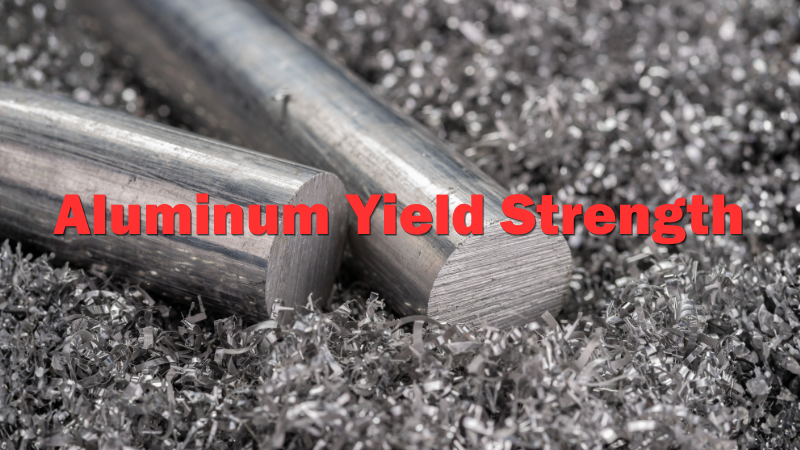
When you specify aluminum for a part, you’re not just choosing a metal—you’re choosing how that part will behave under real loads. If the material yields, it won’t “spring back.” It will bend, warp, or lose alignment permanently—even if it doesn’t crack.
In this guide, you’ll learn what aluminum yield strength means, how it differs from tensile strength, how it changes across common alloys and tempers, and how to choose the right grade for your application.
What is Yield Strength?
Yield strength is the stress level at which a material stops behaving elastically and begins to deform permanently. For engineers and businesses, it’s often more critical than tensile strength.
Yield Strength Explained in Simple Terms
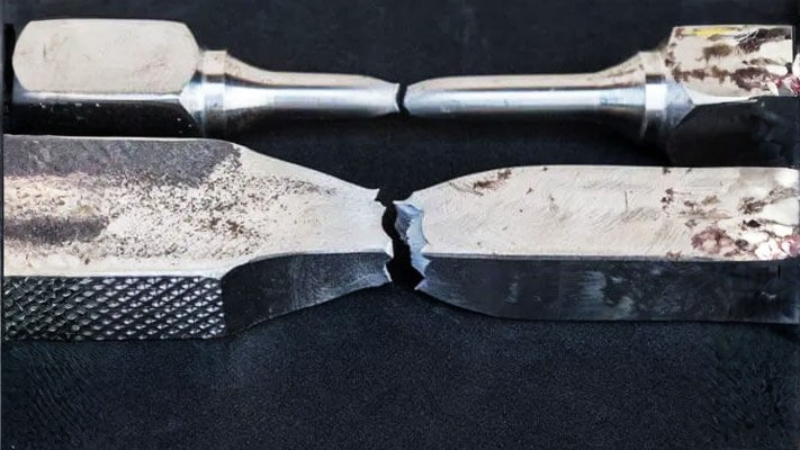
- Elastic deformation: When a material is stressed (subjected to load) but returns to its original shape once the load is removed (like a spring).
- Plastic deformation: When stress exceeds the yield strength, the material undergoes permanent change and does not return to its original form.
Yield strength marks the boundary between those two behaviors by marking the “point of no return”.
Why Yield Strength Matters in Design?
Engineers must ensure that operational stresses stay below yield strength to avoid permanent damage.
In B2B contexts, aerospace, automotive, or construction, choosing alloys with the right yield strength prevents costly failures, warranty claims, and safety hazards.
Yield Strength vs Tensile Strength
Key Differences
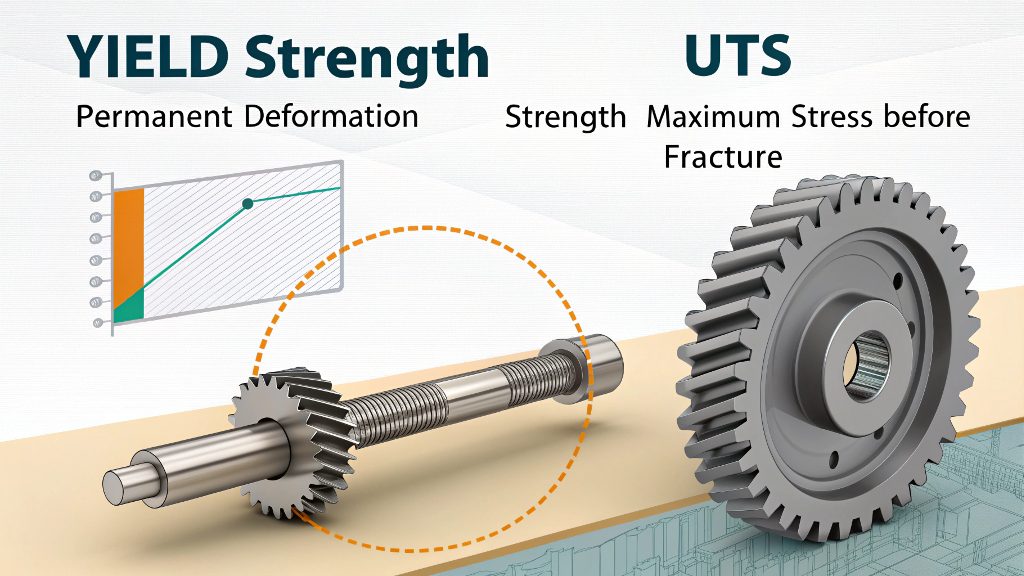
Yield strength is about preventing permanent deformation, while tensile strength is about ultimate failure. Tensile strength values are usually higher, but yield strength is the practical limit.
Most structures are designed to operate well below tensile strength. Yield strength ensures that bridges don’t sag, car frames don’t bend, and machinery doesn’t lose alignment under repeated loads.
What Is the Yield Strength of Aluminum?
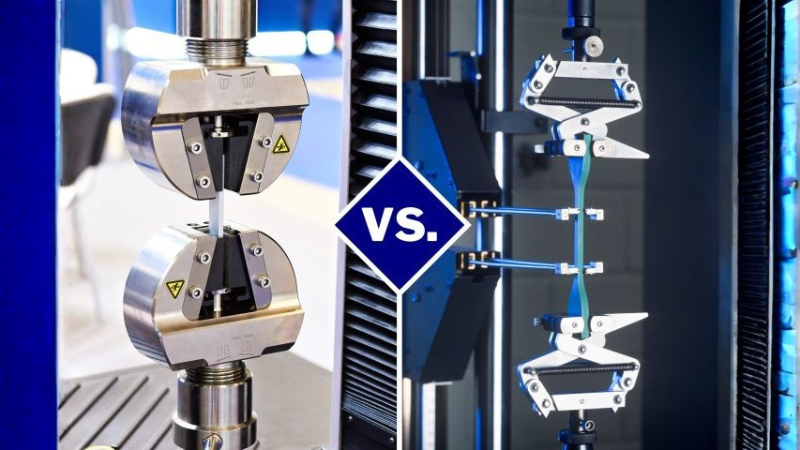
Yield strength in aluminum alloys varies widely. It may count as low as 7 MPa in pure aluminum, but it can get over 500 MPa in high-strength alloys.
Pure Aluminum: 7–11 MPa
Extremely soft and ductile, unsuitable for load-bearing applications. Used mainly in packaging (foil, cans) and electrical conductors.
1100 alloy (commercially pure): 35 MPa
High-strength alloys like 7075-T6 approach the yield strength of mild steels, yet weigh about one-third as much, making them indispensable in aerospace and automotive industries.
Yield Strength of Common Aluminum Alloys
Aluminum alloys exhibit a wide range of yield strengths depending on their composition and temper (heat treatment or work hardening condition).
Such variability is what makes aluminum so versatile – soft, ductile grades are used in packaging. Whereas high-strength alloys rival steels in aerospace and defense.
Yield Strength of Aluminum vs Steel
Aluminum alloys have yield strengths ranging from 35–500 MPa, while steels span 250–1000+ MPa. Steel is stronger, but aluminum’s lower density (about 1/3rd) makes it the preferred choice.
Yield Strength Comparison: Aluminum vs Steel
Which Aluminum Alloy Has the Highest Yield Strength?
When it comes to yield strength, 7075 aluminum stands out as the heavyweight champion among aluminum alloys.
But as with most engineering decisions, the “strongest option” isn’t always the best choice.
It’s because trade-offs in cost, corrosion resistance, and weldability often dictate which alloy is most suitable for a given application.
7075 Aluminum: The High-Strength Leader
- Yield Strength: 503 MPa (73,000 psi), comparable to mild steels.
- Applications: Widely used in aerospace, defense, and high-performance sporting equipment.
- Corrosion resistance: Lower than many other alloys, requiring protective coatings or anodizing.
- Weldability: Poor—difficult to weld without compromising strength.
- Die Casting Cost: Higher than general-purpose alloys due to specialized processing.
6061 Aluminum: The Balanced All-Purpose Alloy
- Yield Strength: 240 MPa (35,000 psi), about half that of 7075 but still robust.
- Applications: Automotive frames, pipelines, marine hardware, and general structural components.
- Excellent corrosion resistance, ideal for marine and outdoor use.
- Good weldability is a major advantage in construction and fabrication.
- Comparatively cost-effective, widely available, and easier to process.
When “Highest Yield Strength” Is NOT the Best Choice?
- Cost Considerations: High-strength alloys like 7075 are more expensive, making them impractical for large-scale construction projects where 6061 or 5052 may suffice.
- Weldability: In industries like shipbuilding or automotive, weldability is often more important than maximum strength. 6061 wins here.
- Corrosion Resistance: Marine applications demand alloys like 5052-H32 or 6061-T6, which outperform 7075 in resisting saltwater corrosion.
Factors That Affect Aluminum Yield Strength
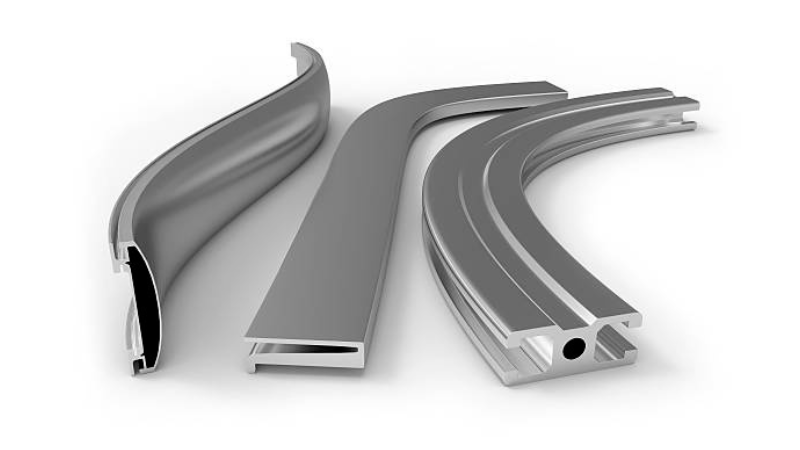
Aluminum yield strength is influenced by alloying elements, heat treatment, cold working, temperature, and manufacturing processes. Each factor can dramatically alter performance.
- Alloy Composition (Mg, Cu, Zn, Si)
Magnesium (Mg) improves strength and corrosion resistance. For example, 5052-H32 (193 MPa yield strength) is widely used in marine applications.
Copper (Cu) boosts strength but reduces corrosion resistance. For example, 2024-T3 (270 MPa) is common in aerospace but requires protective coatings.
Zinc (Zn) provides very high strength when combined with Mg and Cu. For example, 7075-T6 (503 MPa) is one of the strongest aluminum alloys.
Silicon (Si) effectively enhances wear resistance and aluminum’s die casting capability. Those alloys are often used in automotive engine components.
- Heat Treatment Processes
Solution Heat Treatment + Aging (T6 temper) rearranges alloy microstructure, dramatically increasing yield strength. For instance, 6061-O (55 MPa) vs 6061-T6 (240 MPa).
Artificial aging is favored in aerospace alloys to maximize strength. Always specify the temper designation when sourcing, as strength can vary by more than 4× within the same alloy.
- Cold Working/Strain Hardening
Mechanical deformation (rolling, drawing, pressing) increases dislocation density, raising yield strength. For instance, 3003-O (35 MPa) vs 3003-H14 (110 MPa) after strain hardening.
The process is rather common in sheet and extrusion products used in roofing, siding, and packaging.
- Temperature Effects
High temperatures reduce yield strength by softening the alloy. For example, aluminum alloys lose 40–50% of yield strength at 200–250°C, limiting use in high-heat environments.
- Manufacturing Processes
Die casting produces alloys with lower yield strength due to porosity and coarse grain structures. Meanwhile, forging and extrusion refine grain size, improving yield strength and consistency.
Emerging processes like additive manufacturing (3D printing) can tailor the microstructures (atomic arrangements). Thus, you can get customized yield strength profiles.
FAQs
- What is the yield strength of aluminum?
Aluminum’s yield strength varies widely depending on alloy and temper. Pure aluminum is very soft (7–11 MPa), while common structural alloys like 6061-T6 reach 240 MPa.
- How does aluminum yield strength compare to steel?
Steel generally has higher yield strength, ranging from 250 MPa in mild steels to over 1000 MPa in advanced high-strength steels (AHSS). Aluminum alloys top out around 500 MPa.
- Which aluminum alloy has the highest yield strength?
7075-T6 aluminum is the strongest common alloy, with a yield strength around 503 MPa (73,000 psi). However, it comes with lower corrosion resistance, poor weldability, and higher cost.
- What is the yield strength of 6061 aluminum?
6061-T6 aluminum has a yield strength of about 240 MPa (35,000 psi). It’s considered an excellent all-purpose alloy, balancing strength, corrosion resistance, weldability, and cost.
- Does heat treatment increase aluminum yield strength?
Yes. Heat treatment (tempers like T6) significantly increases yield strength. For example, 6061-O (annealed) has a yield strength of 55 MPa, while 6061-T6 jumps to 240 MPa.
- Is yield strength more important than tensile strength?
Yield strength is more important because it defines the stress limit before permanent deformation. Tensile strength marks the ultimate breaking point, but structures are rarely designed to reach that.
Conclusion
Aluminum does not have a single “strength”—its yield strength can change dramatically depending on alloy chemistry and temper (heat treatment or work hardening). That range is exactly why aluminum is so widely used: you can choose softer, more formable grades for shaping and forming, or higher-strength tempers for structural performance where holding shape under load matters.
The most reliable way to select the right aluminum is to start with your real design requirements—load direction, allowable deflection, environment (corrosion exposure), fabrication method (welding/forming), and target safety factor—then match them to an alloy/temper that fits.
Best Alloy Selection for Your Project at HONJENNY
No need to exhaust yourself with the quest for a perfectly balanced alloy with the best properties. We’re professionals here at Honjenny with years of experience in balancing material properties for your needs. Request a Quote for aluminum materials for further details.