
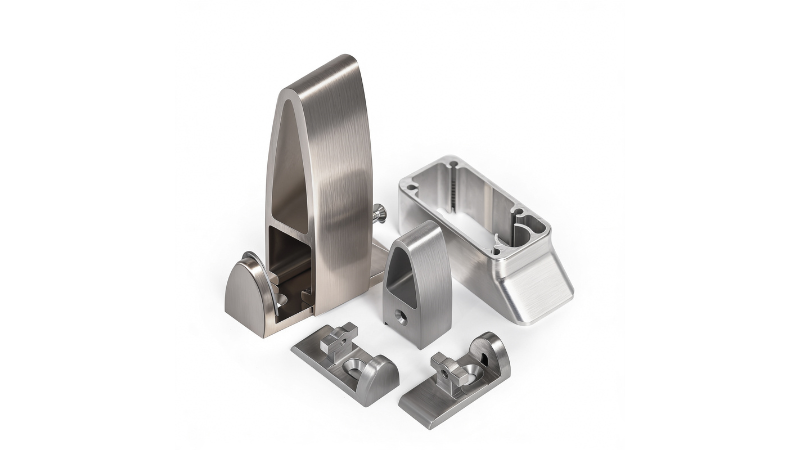
If you are developing a die-cast part for automotive, electronics, machinery, or consumer products, ADC12 is one of the first aluminum alloys you are likely to encounter. ADC12 is a widely used die-casting alloy commonly associated with A383 in the North American market. It is popular in high-pressure die casting because it offers a strong balance of castability, mechanical performance, dimensional stability, and practical machinability.
For many engineers and sourcing teams, the real question is not just what ADC12 is, but whether it is the right alloy for a specific part. This guide explains ADC12 aluminum alloy properties, composition, common uses, and when it makes sense to choose it over other die-casting materials.
What Is ADC12 Aluminum Alloy?
ADC12 is an aluminum-silicon-copper alloy primarily used in high-pressure die casting. Because of its composition, ADC12 is especially well suited for parts that require good mold filling, fine detail reproduction, and efficient production at scale.
That makes it a common choice for components with thin walls, ribs, bosses, and complex shapes. Compared with more general-purpose die-casting alloys, ADC12 is often favored when design complexity and repeatable quality are major priorities.
ADC12 Aluminum Alloy Chemical Composition
Tip: Silicon and copper are the two most influential alloying elements in ADC12. Silicon mainly improves castability, while copper mainly improves strength.
ADC12 Alloy Properties
The tables below summarize the most important ADC12 alloy properties under high-pressure die-casting conditions, so you can quickly evaluate its performance, manufacturability, and suitability for complex die-cast parts.
Mechanical Properties
Physical Properties
When Should You Choose ADC12?
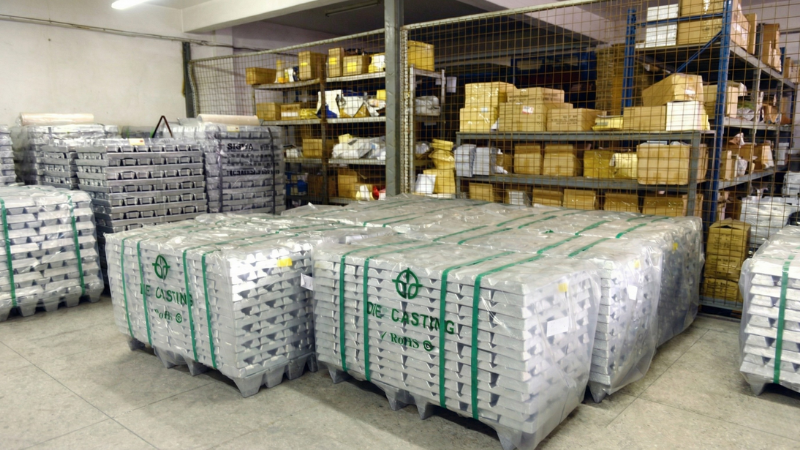
ADC12 is a strong choice when your part is designed for high-pressure die casting and requires a balance of castability, mechanical performance, and production efficiency. It is especially suitable for components with thin walls, ribs, bosses, and complex geometries, where stable filling and dimensional consistency are important.
For manufacturers, the ADC12 is a good choice when you need the following features:
- Stable filling in complex die-cast designs
- Good dimensional stability in production
- A lightweight aluminum solution with practical mechanical performance
- Secondary CNC machining after casting
- Efficient manufacturing for repeat production
ADC12 vs A380: What Is the Difference?
ADC12 and A380 are often compared because both are common die-casting alloys.
Choose ADC12 if you need:
- Better filling for thin-wall or intricate parts
- More reliable casting performance in complex geometries
- Good dimensional stability for detailed components
- Strong compatibility with secondary machining
Choose A380 if you need:
- A dependable general-purpose die-casting alloy
- Balanced overall performance for standard applications
- A proven material for a wide range of industrial parts
- A practical choice when the design is not especially difficult to fill
In summary, unless your project has specific material requirements, Honjenny’s engineers generally recommend ADC12 as the preferred alloy for high-pressure die casting. Its excellent flow characteristics make it especially suitable for thin-walled and complex parts, while its stable casting performance helps support efficient, high-volume production. For projects that require consistent quality, strong manufacturability, and cost-effective mass production, ADC12 is often the first alloy we recommend.
Can ADC12 Be Machined and Surface Finished?
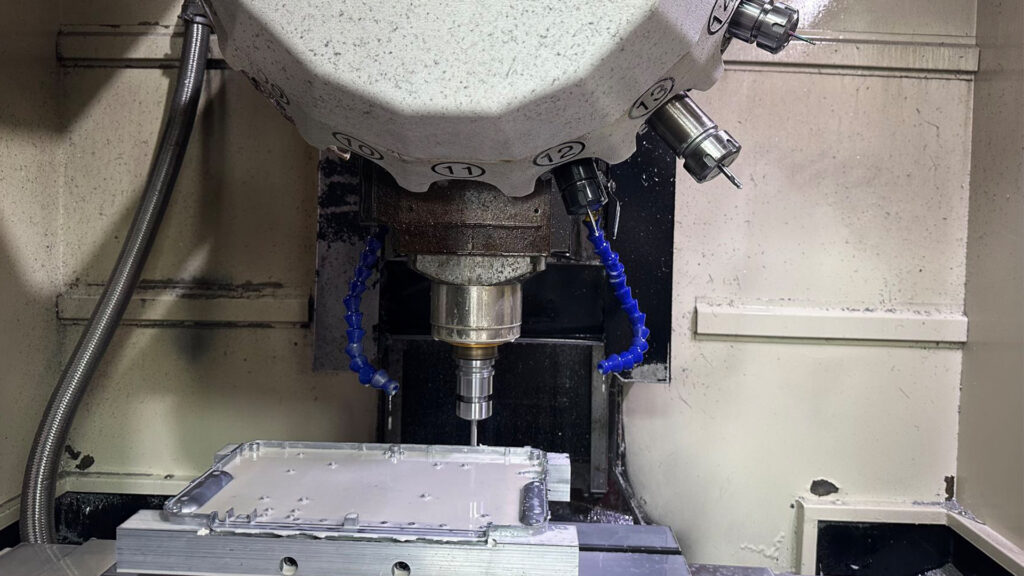
Yes. ADC12 is commonly used in projects that require secondary machining after casting. Features such as threaded holes, precision surfaces, and critical dimensions can often be finished through CNC machining.
Surface finishing is also possible, but the best finishing method depends on the part requirements. Powder coating, painting, and other protective or decorative finishes are common options for die-cast aluminum. Anodizing may be possible in some cases, but die-cast aluminum alloys can present more finishing challenges than wrought aluminum, especially when appearance consistency is important.
Because of that, finish requirements should be considered early in product development, ideally before mold design is finalized.
How to Improve Quality and Reduce Defects in ADC12 Die Casting
4-拷贝1-1024x576.jpg)
- Keep wall thickness uniform to reduce shrinkage, porosity, and warping
- Avoid sharp corners and sudden thickness changes to improve metal flow
- Design ribs and bosses carefully to prevent local defects
- Use proper draft angles for smoother part ejection
- Optimize gate and vent design to reduce air traps and incomplete filling
- Plan machining areas early to leave enough material for finishing
- Maintain stable casting parameters for more consistent quality in mass production
To improve quality and reduce defects in ADC12 die casting, focus on uniform wall thickness, smooth part transitions, proper draft angles, balanced rib and boss design, effective venting, and stable process control. These steps help reduce porosity, shrinkage, incomplete filling, and dimensional variation.
ADC12 Industry Applications and Use Cases
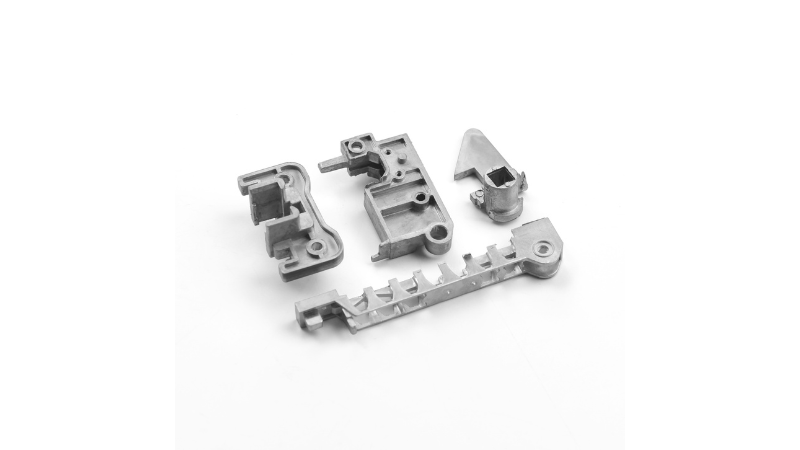
ADC12 is widely used across many industries because it offers good castability, stable performance, and efficient mass production.
- Automotive Components: Commonly used for brackets, covers, housings, transmission-related parts, and other structural or functional components that require lightweight performance and efficient mass production.
- Electronics Housings: Suitable for electronic enclosures, frames, heat-dissipating parts, and protective housings that need dimensional stability and good casting precision.
- Furniture and Hardware Components: Widely used for furniture fittings, handles, locks, connectors, and decorative hardware parts because it supports detailed shapes and stable large-scale production.
FAQs
What is the difference between ADC12 and 6063?
ADC12 is a die-casting alloy used for complex high-pressure die-cast parts, while 6063 is a wrought extrusion alloy better known for smooth surface finish, corrosion resistance, and anodizing performance. In simple terms, choose ADC12 for die-cast components and 6063 for extrusions or visible anodized profiles.
Is ADC12 better than A380?
Not always. ADC12 is often preferred for more intricate parts that need better die filling, while A380 is the more common general-purpose workhorse alloy for a wide range of die-casting applications.
Is ADC12 the same as A383?
They are usually treated as close equivalents, but it is safer to say that A383 is the closest North American equivalent to ADC12 rather than calling them fully identical in every specification.
Conclusion
ADC12 remains one of the most practical and widely used aluminum alloys for high-pressure die casting. Its balanced combination of castability, dimensional stability, machinability, and production efficiency makes it especially suitable for thin-walled, complex, and high-volume parts. For manufacturers looking for a reliable alloy that supports both part quality and efficient mass production, ADC12 is often one of the best choices.
Honjenny Die Casting Services for ADC12
If you are planning an ADC12 die-casting project, choosing the right manufacturing partner is just as important as choosing the right alloy. At Honjenny, we support ADC12 projects from early development to full-scale production with integrated services that help improve efficiency, quality, and overall project coordination.