
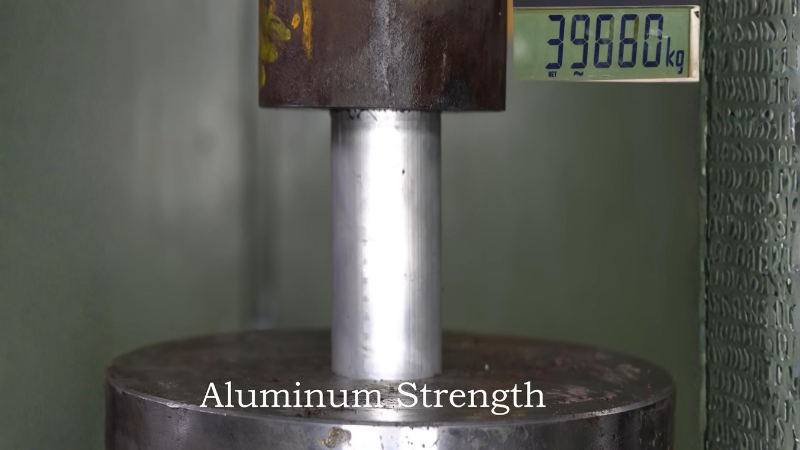
Aluminum has been a leading choice across industries due to its favorable properties. You’ll find the metal in skyscrapers, bridges, automobiles, aircraft, etc. That’s where the obvious question is – how strong is aluminum?
More importantly, what is aluminum’s strength against competitors like steel? The answer is crucial for everyone, as you must decide which metal is best for your project. Let’s break down aluminum’s strength for a clear understanding.
What Does “Strength” Mean in Materials (Steel and Aluminum)?
In metallurgy and mechanics, “strength” indicates a metal/material’s ability to resist forces without breaking apart or permanent deformation. It’s not a single property; it combines tensile, compressive, yield, and impact strengths.
Each strength type remains relevant for specific applications. Aluminum is notably lighter and less strong than steel. However, it can rival or even outmatch steel in strength-to-weight ratio and corrosion resistance for the same size.
Strength Types: Tensile Strength and Yield Strength
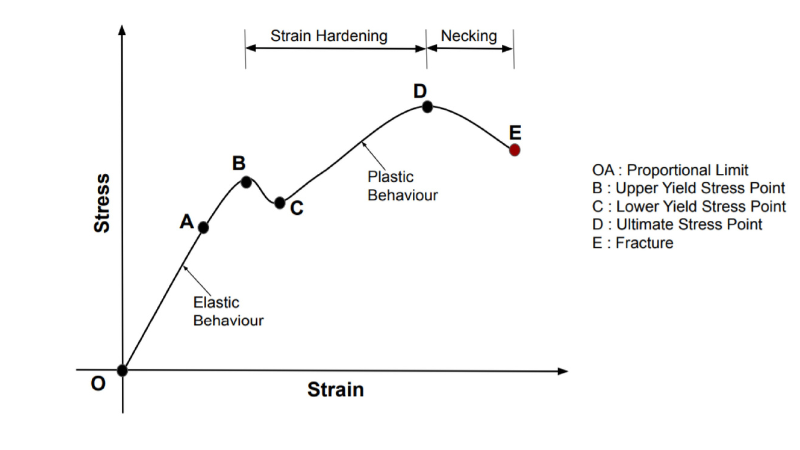
You must know that not all strengths are mandatory to understand metals like aluminum and/or steel. Tensile strength and yield strength are the most commonly used metrics for structural comparisons. Hardness is a different property (wear/indentation resistance) and does not directly equal strength.
- Tensile Strength: Resistance to being pulled apart. Steel grades range from 400–500 MPa (medium-carbon steel). Al features 90–310 MPa for common alloys. But high-strength alloys like 7075-T6 can reach 572 MPa, while AA7068-T6 can reach 710 MPa.
- Yield Strength: Stress at which permanent deformation begins. Steel’s yield strength is 250 MPa, whereas aluminum measures 40–310 MPa, depending on the alloy.
On that note, the Steel often has higher absolute strength (including compressive/yield strength) than common aluminum alloys, but high-strength aluminum grades can narrow the gap depending on temper and design.
Impact performance depends heavily on alloy, temper, thickness, and temperature. Aluminum is generally more ductile than many steels, but some steels (especially toughened structural steels) can outperform aluminum in impact resistance.
Strength-to-Weight Ratio
Steel is 3x denser than aluminum. Therefore, aluminum can deliver comparable strength at a fraction of the weight. For example, fighter jets like the F-16 have 80% aluminum in their airframes. Al’s reduced weight in the vehicle can significantly improve the fuel economy.
Hardness vs Strength for Steel/Aluminum – Why They’re Not the Same?
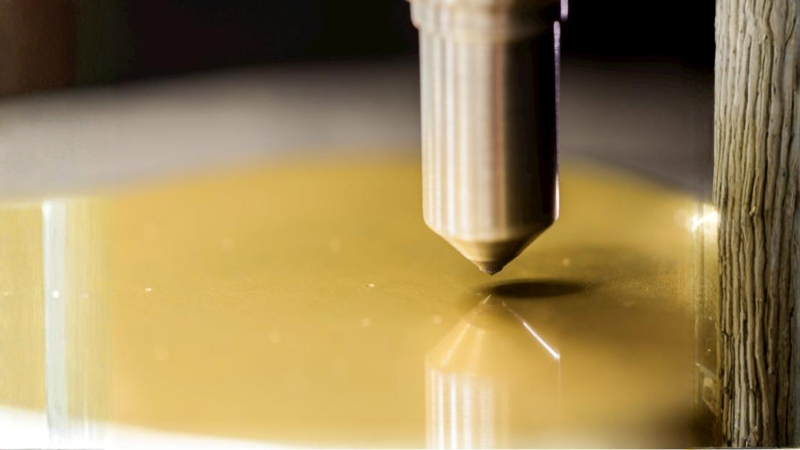
Hardness measures the resistance to surface indentation or scratching. Meanwhile, sufficient strength is about enough resistance to applied forces (tensile, compressive, yield).
A hard material can be brittle (like glass) or strong but relatively soft (like aluminum). Steel is harder than aluminum, making it suitable for tool cutting and wear-resistant components.
In total, “strength” is multidimensional. Steel seems stronger in absolute terms, but aluminum’s balanced approach induces efficiency and durability without pushing for raw materials’ toughness.
Notable Properties of Aluminum
The worldwide aluminum market valued $265.13B in 2025. The size is likely to become $454.84B by 2034, marking a CAGR of 6.20%. Asia-Pacific dominated the market, accounting for 65.10% in 2025. Still, the US market size is about to grow significantly, reaching $43.05B by 2032.
The increasing demand stems from surging adoption by electric vehicle manufacturers to reduce vehicle weight. But there’s more to strength concerns. Anyone in aluminum manufacturing knows that aluminum alloy, when selected accordingly, has much more to offer.
a. Light Weight (Low Density)
Aluminum parts weigh about one-third (2.7 g/cm³) of steel equivalents. It can reduce fuel consumption in vehicles and aircraft.
b. Corrosion Resistant
Aluminum forms a protective, durable, and thin oxide coating when exposed to air. The natural oxide layer seems ideal for marine environments and outdoor structures.
c. Electrical and Thermal Conductivity
The metal’s thermal conductivity measures 235 W/m·K, second to copper among common metals. It also has widespread uses in power lines due to balanced conductivity and low weight.
d. Alloying Potential
Pure aluminum remains relatively soft with a tensile strength of 90 MPa. Heat treatment and alloying elements (copper, magnesium, and zinc) can significantly enhance strength.
e. Physical Properties
The melting point is 660°C (notably lower than steel’s 1370–1530°C). It makes aluminum alloys easier to cast and shape. But they remain less suitable for high-temperature applications.
Al’s universal non-magnetic properties are one of the advantages for electronics and sensitive equipment. Its malleability enables easy extrusion, rolling, bending, and/or forming into complex shapes.
f. Sustainability and Recycling
Aluminum retains properties indefinitely, eliminating the major concern regarding recyclability. Recycling aluminum saves 95% of the energy compared to primary production.
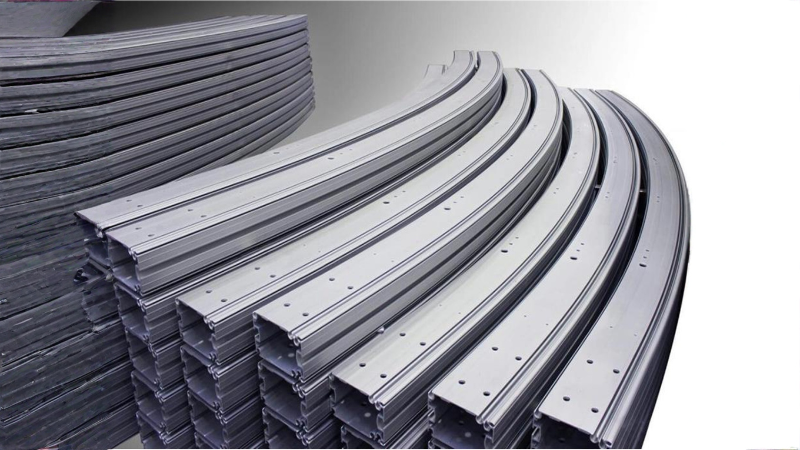
How Strong Is Aluminum?
Aluminum’s strength in a pure metallurgical condition isn’t exactly up to the mark. Alloying with copper, magnesium, zinc, or silicon can alter the strength for the better.
Even heat treatments can help an alloy achieve comparable strengths. Take a look at the summary table right below to catch up with the strength disparities in aluminum.
Values are typical/approximate and vary by product form, specification, and heat treatment.
*T6 = high-strength temper made from solution heat-treating and artificial aging.
Aluminum’s strength depends heavily on its alloy and treatment. Alloys like 7075 and 7068 can rival high-strength steels, proving that aluminum isn’t just lightweight but also structurally formidable.

Strength Comparison: Aluminum vs Steel
Steel is stronger than aluminum per volume. However, aluminum’s lightweight nature grants an impressive strength-to-weight ratio. Steel dominates in skyscrapers and bridges, whereas aluminum gets preference in aerospace, automotive, and marine industries.
Quick Comparison: Aluminum and Steel Strength
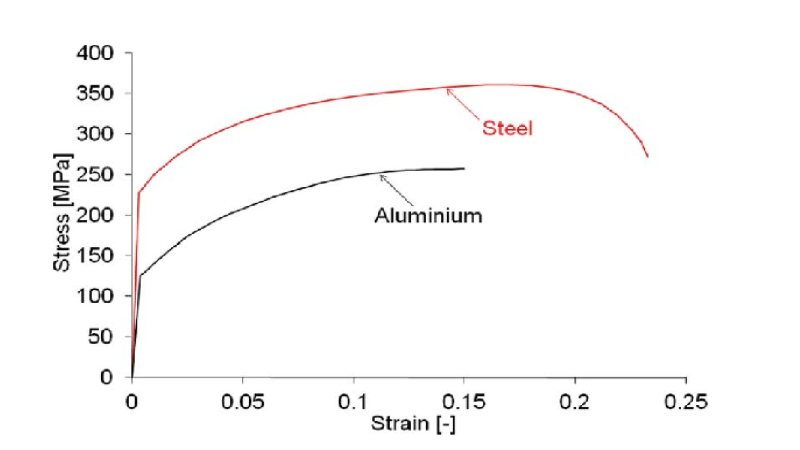
With aluminum and steel, engineers begin with ultimate tensile strength. Steel generally holds higher values, especially if it’s perhaps a steel alloy for structural use.
The stress-strain curve of the two materials reveals the differences clearly. Steel can withstand greater loads, but aluminum shows excellent resilience by resisting plastic deformation.
How to Choose the Right Aluminum Alloy for Your Application?
Many alloys from different grades are available with reasonable strength to serve high-end purposes. Selecting the right option from a strength perspective requires a well-defined balance of different factors.
a. Intended Application
- Marine and Outdoor: Alloys such as 5052 and 6061 are excellent for humid or saltwater environments.
- Aerospace and Automotive: High-strength alloys such as 7075 and 7068 seem like a better choice.
- Construction: 3003 is used for roofing, siding, and architectural panels due to its cost-effectiveness.
b. Corrosion Resistance
Pure aluminum naturally forms a protective oxide layer, making it highly corrosion-resistant. However, 5052 is highly resistant to seawater and industrial chemicals.
6061 comes with good corrosion resistance in pipelines and marine structures. And very strong 7075 is less corrosion-resistant, requiring protective coatings for high-end uses.
c. Temperature Concerns
- High-Temperature Applications: Aluminum is less suitable for engine blocks or furnace parts.
- Cryogenic Applications: Al performs well at very low temperatures by retaining its toughness.
d. Heat Treatment vs Work Hardening
Heat-treatable alloys (6061-T6, 7075-T6) can have their strength increased by precipitation hardening. Stable mechanical properties come with very high yield and tensile strength. But reduced ductility worsens with welding as it weakens heat-treated zones.
Non-heat-treatable alloys (5052-H32, 5083-H116) require cold working to increase strength. Excellent toughness comes with superior corrosion resistance. Even the better strength characteristics are retained after welding for high-stress applications.
e. Manufacturing Constraints
- Welding: 6061-T6 loses up to 40% strength in the heat-affected zone. But 5083 retains most strength post-weld.
- Forming: High-strength tempers crack more easily. Choose softer tempers for forming, then heat treat when possible.
- Machining: Stronger alloys machine better (7075 > 6061 > 5xxx). However, tool wear also increases with the strength.
f. Strength vs Cost Trade-Offs
- 3003 alloy seems perfect for non-structural applications with lower expense and moderate strength.
- 5052 alloy with corrosion resistance in the marine and automotive industries falls under the mid-cost range.
- 6061 alloy is rather affordable, versatile, and strong enough for aerospace and automotive parts.
- 7075 and 7068 mark a high cost for extreme strength in defense, aerospace, and performance sports.
Designers, engineers, and manufacturers are open to considering many options. Clients have to specify what they need/want/desire/expect from the aluminum product. Only then can the choices be narrowed down.
FAQs
How strong is aluminum compared to steel?
Standard structural steels have tensile strengths of 400–965 MPa. In comparison, common aluminum alloys hold 90–310 MPa. But alloys like 7075-T6 and 7068-T6 offer 572 MPa and 710 MPa, respectively.
What is the strongest aluminum alloy?
The strongest commercially available aluminum alloy is 7068-T6. It features a whopping tensile strength of 710 MPa with a yield strength of 683 MPa. Such values are comparable to high-strength steels.
Is aluminum strong enough for construction?
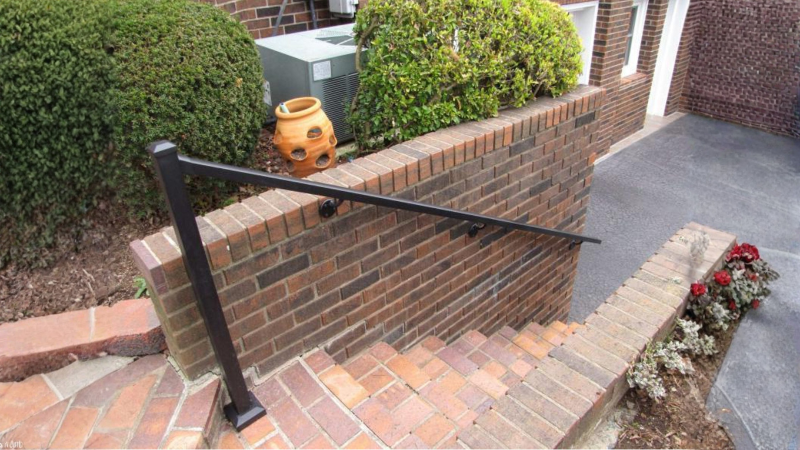
Yes. Steel remains dominant in load-bearing structures like skyscrapers and bridges. However, aluminum has widespread uses in construction for facades, roofing, window frames, curtain walls, and handrails.
Does aluminum lose strength over time?
Aluminum doesn’t inherently lose strength over time. Its natural oxide layer protects the material from external rigors. Under normal conditions, aluminum retains its mechanical properties for decades.
How strong is 6061 aluminum?
6061 aluminum, especially in the T6 temper, is one of the strongest common alloys. Its tensile strength is 310 MPa, and its yield strength is 270 MPa (aerospace, automotive, pipelines, marine, and construction).
Conclusion
The strength of aluminum isn’t a fixed number. It moves within a range defined by alloy composition and heat treatment. Advanced alloys like 6061, 7075, and 7068 embrace exceptional strength that can go toe-to-toe with stainless steel. However, aluminum’s incredibly balanced strength-to-weight ratio, corrosion resistance, and adaptability turn the metal far ahead of steel.
Strong Aluminum Parts for Everlasting Performance at HONJENNY
We specialize in balancing material properties to meet your specific project requirements from the core. Honjenny guarantees the best possible aluminum solution through innovation and precision. Contact us to know how our expertise can help your initiatives.