
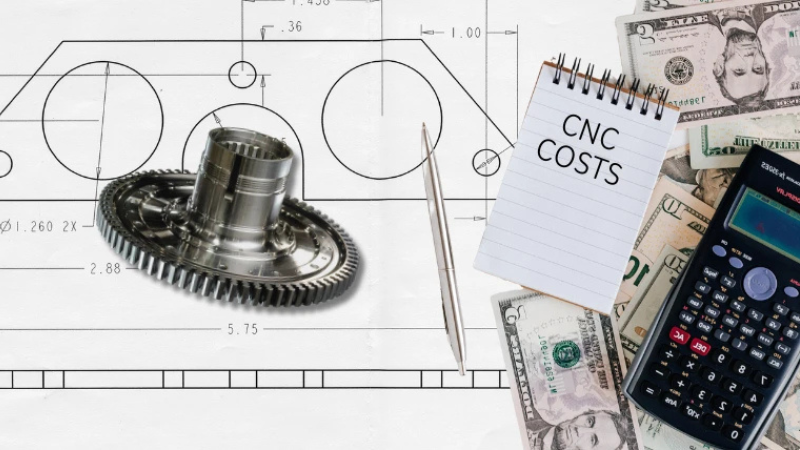
Modern manufacturing of materials must deliver precision, efficiency, and repeatability. Despite many different methods, CNC machining remains a top favorite among manufacturers and customers alike.
Perfectly executed CNC can deliver consistent quality at scale. Nonetheless, clients are bound to ask – how much does CNC machining cost? Cost calculation for transparency is a prerequisite of partnerships.
Knowing the true cost of CNC machining empowers smarter decisions and stronger negotiations. The article aims to discard the complexity with a practical breakdown of CNC machining cost calculation.
CNC Cost Calculation: Factors to Influence the Value
CNC operations cost calculation takes several crucial factors into account. From material + machining time + labor/setup to finishing + overhead + profit margin – everything gets into the play.
01. Material for CNC Machined Parts
- Aluminum: Highly machinable, lightweight, and widely available. It causes minimal tool wear, being one of the cheapest options with many finishes.
- Stainless Steel: Versatile but harder to cut, requiring slower speeds and more robust tooling. Costs significantly vary depending on the alloy grade.
- Copper Alloys: Excellent thermal and electrical conductivity, but prone to tool wear. The overall machining costs are somewhat higher.
- Titanium: Extremely strong but difficult to machine due to its hardness and poor thermal conductivity. Aerospace parts require double the machining time.
- Plastics: ABS, nylon, and polycarbonate are lightweight and easy to machine. However, the overall cost fluctuates with oil-derived supply chains.
Harder materials increase tool wear and machining time. Soft metals like aluminum reduce cycle time. Global shortages/low abundance raise costs.
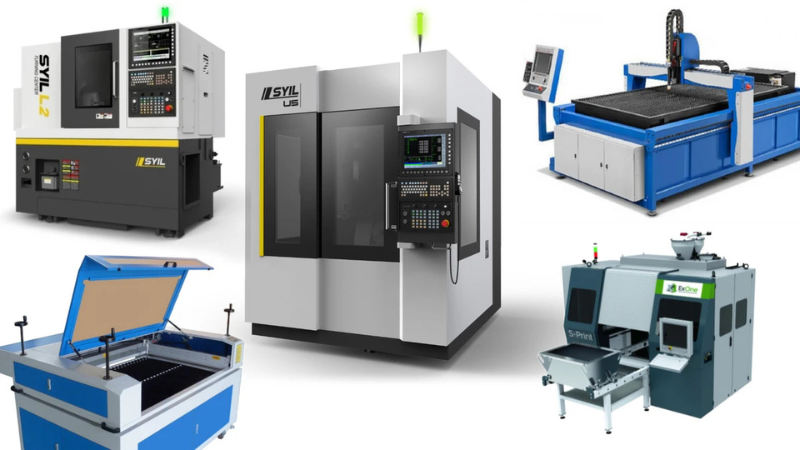
02. Machine Type + Hourly Rate
- 3-Axis CNC Milling: Lowest cost, suitable for simple geometries.
- 4-Axis and 5-Axis Machining: Higher cost due to complex interpolation, advanced software, and expensive machines.
- CNC Turning vs Mill-Turn: Turning is cheaper for cylindrical parts. Mill-turn combines milling and turning for complex geometries, increasing costs.
Aerospace and complex automotive parts heavily require 5-axis machining to achieve intricate geometries and tight tolerances. It justifies the higher hourly rates.
03. Machining Time and Toolpath Efficiency
CAM strategy directly impacts cycle time. Cutting speed, feed rate, depth of cut, and tool changes all determine efficiency.
Longer machining time contributes to higher cost. Optimized toolpaths can reduce cycle time by 20% – 30%, saving thousands in high-volume production.
04. Part Geometry (Complexity)
Thin walls, undercuts, deep cavities, and micro features increase machining time and risk of part failure. Complex shapes may require 5-axis machining or EDM (Electrical Discharge Machining) for precision.
Some cost-increasing geometries are –
- Deep pockets (multiple passes).
- Sharp internal corners (small tools + slow speeds).
- Small radii (micro end-mills prone to breakage).
- Sculpted surfaces (advanced interpolation).
05. Tolerances and Precision Requirements
Tight tolerances (±0.01 mm) demand slower speeds, more tool passes, and inspection time. ASME and ISO standards guide tolerancing, ensuring functionality at increased cost.
Over-specification becomes a rather common issue. Parts specified at ±0.01 mm when ±0.05 mm would suffice can double the machining time unnecessarily.
06. Production Volume (Batch Size)
- Prototyping: A high setup cost and programming time are spread across very few parts, making the per-unit cost high. A prototype aerospace bracket may cost 5–10× more per unit than in mass CNC machining process.
- Low-Volume Production: Overhead costs are partially absorbed, but unit costs remain higher. Ideal for industries like medical devices or custom automotive parts, where batches are small.
- Mass Production: Economies of scale reduce CNC machining cost. Setup and programming are amortized across thousands of parts. Automotive machining of thousands of engine housings can achieve cost efficiency.
07. Setup Time and Labor
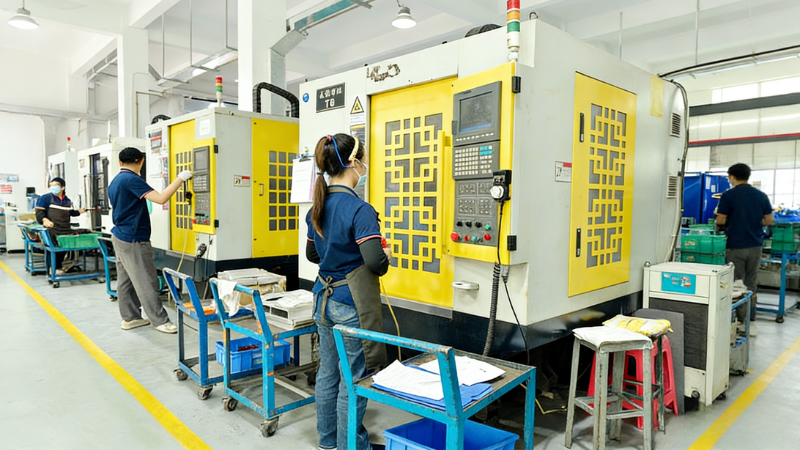
- Programming Costs: Toolpaths and simulations during the product development process take hours based on part complexity.
- Fixturing and Workholding: Designing and installing fixtures adds cost. Complex geometries may require custom jigs.
- Calibration: Every machinery must remain aligned and tested before production. Wall thickness and finishing process drive production quality.
- Multiple Setups: Each additional setup directly contributes to further expense. It’s more evident in custom parts in larger quantities.
08. Cost of CNC Machining (Tooling + Wear)
- Hard Materials (steel, Inconel, titanium) accelerate tool wear, requiring frequent replacement.
- Consumables: End mills, drills, and inserts are hidden costs that accumulate over time.
- High-Quality Carbide Tools: Though more expensive upfront, they last longer and reduce downtime.
- Machining Inconel turbine blades in aerospace can wear out tools in hours, driving up costs.
09. Post-Processing (Surface Finishing)
- Anodizing: Corrosion resistance and aesthetics in consumer electronics.
- Sandblasting: Improves surface texture, often used in automotive.
- Powder Coating: Durable finish, adds cost for consumer products.
- Polishing: Labor-intensive, increases cost for medical implants.
- Heat Treatment: Enhances hardness, adds high cost for aerospace and defense parts.
- Surface Roughness (Ra): Tighter Ra values require slower machining and additional finishing.
10. Control, Inspection, Testing: Zero Compromising Quality
- CMM (Coordinate Measuring Machine) Inspection: Ensures dimensional accuracy, adds machine and labor cost.
- First Article Inspection (FAI): Mandatory in aerospace and defense, requiring detailed documentation.
- Material Certification: Verifies alloy composition, critical for regulated industries.
- Functional Testing: Assemblies like valves or actuators require performance checks.

Cost implications like shipping costs vary based on location and time. It has nothing to do with all the factors related to manufacturing operations, specialized tooling, material selection, or initial investment.
Pricing Methods Used for CNC Machining Cost Efficiency
- Cost-Based Pricing (Time × Rate Model)
It’s the most common method in precision machining shops worldwide. The method is transparent and easy to justify while aligning with shop economics. Quotes are calculated by combining –
- Cycle time (actual machining duration per part).
- Fixed setup cost (programming, fixturing, calibration).
- Machine hourly rate (varies by machine type and region).
- Labor (operator supervision, tool changes, inspection).
Example: A 3-axis CNC milling job requiring 2 hours of machining and 1 hour of setup will be billed at the shop’s hourly rate plus labor.
Machining efficiency directly impacts profitability. Precision industries (aerospace, automotive) prefer this model because it ties cost to measurable production time.
- Market-Based Pricing
Suppliers adjust quotes based on prevailing market rates rather than internal costs. It’s popular in aluminum machining, where competition is high, and parts are relatively easy to produce.
However, shops may cut corners on quality or inspection to remain profitable. Also, customers quickly switch to competitors with lower production costs or production costs for cost savings.
Example: In China’s Pearl River Delta, aluminum CNC machining shops often compete aggressively. The streamline production sometimes quotes 20–30% below cost-based rates to win contracts.

- Value-Based Pricing
Price reflects the value delivered rather than just time or market rates. It’s used for critical aerospace and medical parts where reliability and certification matter more than cost. Factors include –
- Faster lead time (for rapid prototyping or urgent aerospace projects).
- Higher accuracy (tight tolerances, advanced inspection).
- Specialized machining capabilities (5-axis machining, EDM, exotic materials).
Example: A titanium orthopedic implant may cost 5–10× more than a simple aluminum bracket because of biocompatibility requirements, tight tolerances, and FDA/ISO certifications.
- Hybrid Pricing (Combination Method)
It’s more like a complex matrix of relevant factors. Modern CNC suppliers combine time cost (cycle + setup), material costs, and market benchmarks. Top benefits include –
- More predictable quotes for customers.
- Transparent breakdown of costs builds trust.
- Balances shop profitability with competitive positioning.
Example: A supplier may calculate machining time and material cost to estimate the project cost. Slight adjustment based on competitor quotes can keep the manufacturing process attractive.
How to Calculate CNC Machining Cost?
The total CNC machining cost can be expressed as –
Total CNC Machining Cost = Material Cost + (Machining Time x Machine Hourly Rate) + Setup Cost + Finishing + Inspection + Overhead + Margin
i. Material Cost = Depends on raw material properties (type, hardness, machinability, and supply).
ii. Machining Time × Hourly Rate = The largest driver of cost, varying by machine type and region.
iii. Setup Cost = Includes programming, fixturing, and calibration.
Iv. Surface Finishing Costs = Surface treatments like anodizing, powder coating, polishing, or heating.
v. Inspection = Quality control processes such as CMM or First Article Inspection.
vi. Overhead = Tool wear, electricity, depreciation, machine maintenance, and facility costs.
vii. Margin = Profit added by the supplier, usually 10% – 20% by default.
How to Reduce CNC Machining Cost?
- Choose Cost-Efficient Materials
Material choice is the first lever of cost control. Al is widely used due to its high machinability, low tool wear, and global availability. It’s 20% – 40% cheaper to machine than titanium or hard steel.
Plastics are cost-effective for prototypes and consumer products but may lack strength for industrial applications. Titanium and Inconel are expensive, often resulting in doubled cycle time and tool wear.
- Simplify Part Geometry
Complex geometries increase machining time and tool changes. Thin walls, deep cavities, undercuts, and micro features require slower feeds and specialized tooling.
A gearbox housing with sharp internal corners may require micro end-mills, increasing cycle time by 50%. Automotive suppliers often redesign parts to eliminate unnecessary features.
- Standardize Tolerances
Tight tolerances (±0.01 mm) require slower speeds, more tool passes, and additional inspection. ASME and ISO standards guide tolerancing, but over-specification is common.
An electronic bracket specified at ±0.01 mm when ±0.05 mm would suffice, doubling the machining time. Apply tight tolerances only where the function demands it to reduce costs.
- Minimize Setup Changes
Each setup involves fixturing, calibration, and programming. Multiple setups increase the cost significantly. Multi-face machining of a complex housing may require 3 – 4 setups.
Meanwhile, a shaft turned in a single chuck is far cheaper. Implement 5-axis machining or mill-turn machines to reduce setups (and therefore, the related expenses).
- Optimize Batch Sizes
Setup costs are fixed per batch. Small batches have high per-unit costs. Meanwhile, larger batches spread setup costs across more parts.
A 3-hour setup for 10 parts adds 18 minutes of setup per part, but for 1,000 parts, it’s negligible. Group orders or plan production runs strategically to maximize economies of scale.
- Select the Right Machining Process
3-axis milling is cost-effective for simple geometries. 5-axis machining is necessary for complex aerospace or medical parts, but comes at a higher hourly rate.
CNC turning is cheaper for cylindrical parts compared to milling. A cylindrical shaft machined on a lathe costs significantly less than milling the same geometry.
- Plan the Surface Finishing Efficiently
Finishing operations add 10% – 30% to part cost. Medical implants with Ra < 0.4 µm double the finishing time. Specify finishing only when necessary.
Avoid cosmetic finishes on non-visible parts. The US aerospace machining costs are driven by tight tolerances, exotic materials, and extensive inspection.
Time Estimation for CNC Machining Price
Accurate machining time estimation is mandatory since it directly impacts cost. Shops use three main approaches –
- CAM Simulation: Computer-Aided Manufacturing (CAM) software simulates toolpaths, cutting speeds, and feed rates. Provides cycle time estimates before actual machining.
Example: Siemens NX or Mastercam can predict machining time within ±10% accuracy.
- Toolpath Optimization: Efficient toolpaths reduce cycle time by minimizing tool changes and idle movements. Adaptive clearing strategies can cut machining time by 20–30% in complex parts.
Expert Tip: High-speed machining strategies can particularly reduce costs with aluminum.
- Real Machining Tests: Shops often run trial cuts to validate CAM simulations. Especially important for exotic materials like titanium or Inconel, where tool wear and heat buildup can distort estimates.
Example: US aerospace suppliers routinely perform test runs on CNC machining projects to ensure compliance with tight tolerances.
CNC Machining Cost Per Hour
01. Machine Type (Depreciation)
3-axis mills are cheaper to run per hour compared to 5-axis machining centers. The latter requires advanced software, precision calibration, and higher purchase costs.
Depreciation is calculated by dividing the machine’s purchase price by its expected lifespan and annual operating hours. For example, a $250,000 5-axis machine running 2,000 hours/year over 10 years adds $12.5/hour in depreciation.
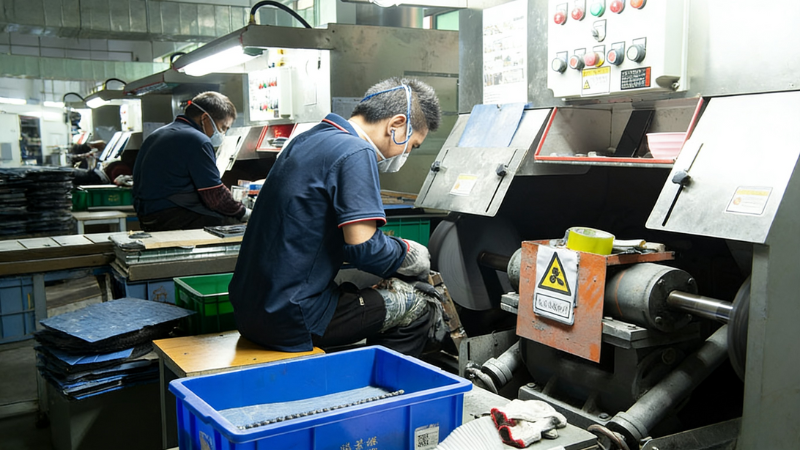
02. Labor Region
- Asia-Pacific: Lower wages reduce hourly CNC costs, making prototyping + small-batch production process more affordable.
- Europe and the US: Higher wages increase hourly rates but are offset by more advanced machinery automation and tighter tolerances.
Skilled labor is essential for resource management, setup, tool changes, and inspection. In aerospace, labor can account for 30–40% of hourly cost.
03. Electricity Cost
CNC machines consume significant power, especially high-speed spindles and coolant systems. Germany has some of the highest industrial electricity costs in Europe. China and India benefit from lower rates, reducing hourly machining costs.
Example: A large CNC lathe may consume 15–20 kWh per hour, adding $2–5/hour depending on local rates.
04. Shop Overhead
Overhead includes rent, insurance, administrative staff, and facility costs. Shops in high-rent regions (Tokyo, New York) face higher hourly costs compared to rural or industrial zones. Overhead is typically spread across total machine hours, meaning underutilized shops have higher per-hour costs.
05. Maintenance and Tooling Replacement
Tool wear is a hidden but major contributor. Carbide end mills last 20–30 hours in hardened steel but much longer in aluminum.
Exotic materials like Inconel or titanium can wear tools in just a few hours. Preventive maintenance (lubrication, spindle calibration) adds predictable costs, while unexpected breakdowns spike hourly rates.
Comparing CNC Machining Costs by Material
Asia (China, India): Competitive for aluminum and plastic machining due to labor and electricity advantages. It makes rapid prototyping and simpler parts cost-effective with market-based pricing.
Europe (Germany, Italy): Higher hourly rates with advanced capabilities and CNC machining process control. The value-based pricing is justified for aerospace parts where accuracy and certification prevail.
US: Hybrid pricing is widely used. Carbon steel shafts and aerospace aluminum components carry higher inspection and documentation loads. It makes cost-based models the baseline for transparency.

Frequently Asked Questions (FAQs)
- What is the average hourly rate for CNC machining?
CNC precision machining hourly rates vary globally. It most likely ranges from $35–$200/hour, depending on material type, cutting tools, region, and complexity.
- Why do CNC machining quotes differ so much between suppliers?
Quotes differ due to machine capability, tolerances, material behavior, labor rates, and setup costs. Global sourcing adds further variation.
- How does part size affect CNC machining cost?
Larger parts require more material, longer cycle times, bigger machines, and further maintenance costs. Such factors increase material as well as machining costs.
- Does CNC machining cost more than 3D printing?
For low-volume prototypes, 3D printing is mostly cheaper. For precision, durability, and mid-to-high volume production, CNC machining is more cost-efficient.
- How do tolerances impact CNC machining cost?
Tighter tolerances (±0.01 mm) require slower speeds, more tool passes, and extra inspection. Such a careful approach naturally doubles machining time.
- What industries pay the highest CNC machining costs?
Aerospace, medical devices, and defense pay the highest. Those sectors rely on exotic materials, tight tolerances, and extensive inspection requirements.
- Can CNC machining costs be reduced with design changes?
Yes. You should start by simplifying the geometry, which can also save time. Even reduced setups and standardizing tolerances can cut costs. You can curtail expenses by 20% – 40%.
- What role does batch size play in CNC machining cost?
Small batches have high per-unit costs (final pricing) due to setup time. In contrast, larger batches spread setup costs, achieving economies of scale.
- Why is CNC machining ideal for prototyping despite higher unit costs?
CNC machining offers fast turnaround, high precision, and flexibility without expensive molds. That’s why it’s ideal for prototypes and low-volume runs.
Conclusion
CNC machining is an investment in precision, efficiency, and innovation when executed perfectly. You must know how the costs are calculated. It empowers procurement teams, engineers, and OEMs to make smarter decisions, balance budgets, and unlock new opportunities.
Save Your Money with Precision CNC Machining from HONJENNY
Honjenny has been leading the manufacturing industry for about 30 years. Our CNC machining and aluminum services guarantee satisfaction. Contact us to discover how we can meet your expectations.