
If you are comparing manufacturing methods for a metal part, aluminum die casting is one of the first processes worth understanding. It is widely used for producing lightweight, precise, and repeatable components in medium to high volumes. For many manufacturers, it offers the right balance of efficiency, consistency, and cost control.
In this guide, you will learn what aluminum die casting is, how the process works, why aluminum is such a popular material, and when this method makes sense for your project. You will also see its key advantages, limitations, common applications, and design considerations.
What Is Aluminum Die Casting?
21-1024x576.jpg)
Aluminum die casting is a manufacturing process that injects molten aluminum alloy into a hardened steel mold, called a die, under high pressure. Once the metal cools and solidifies, the die opens and the part is ejected.
The process is designed for speed, consistency, and precision. Because the same die can be used repeatedly, manufacturers can produce large quantities of identical parts with tight tolerances and good surface quality.
In simple terms, aluminum die casting is often chosen when a part needs to be:
- lightweight,
- dimensionally consistent,
- produced in high volumes,
- and shaped with complex features.
How the Aluminum Die Casting Process Works
Although the exact setup may vary by part and supplier, the basic workflow is usually similar.
1. Melting the Aluminum Alloy
The process begins by heating the selected aluminum alloy until it becomes molten. The alloy must be carefully controlled to maintain the right composition and casting performance.
2. Injecting Molten Metal Into the Die
The molten aluminum is forced into a steel die cavity under high pressure. This pressure helps the metal fill thin sections and detailed features quickly.
3. Cooling and Solidification
Once inside the die, the aluminum cools rapidly and takes the shape of the cavity. Fast cooling is one reason die casting can achieve good repeatability and efficient cycle times.
4. Ejection
After the part solidifies, the die opens and ejector pins push the casting out of the mold.
5. Trimming and Finishing
Excess material, such as runners, gates, and flash, is removed. Depending on the project, the part may then go through machining, deburring, surface finishing, coating, or inspection.
Why Aluminum Is Used in Die Casting?
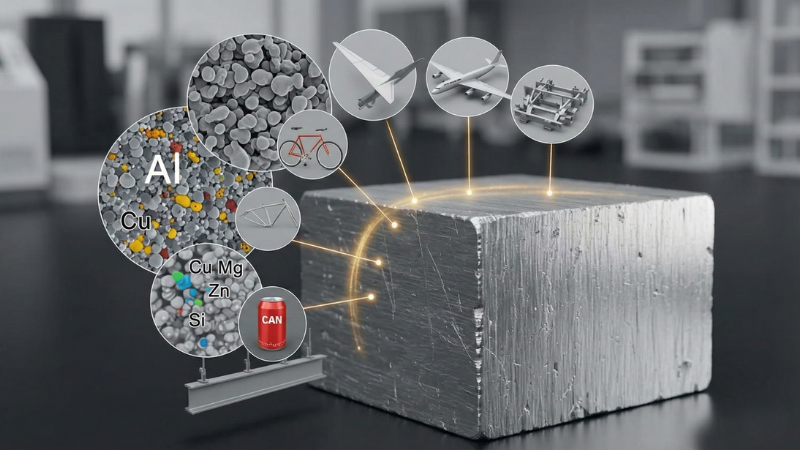
Aluminum is widely used in die casting because it combines low weight, corrosion resistance, conductivity, recyclability, and strong market demand. These properties make it a practical choice for many high-volume industrial applications.
Lightweight
Aluminum has a density of about 2.7 g/cm³, which is roughly one-third that of steel. This makes it ideal for parts that need to reduce weight while maintaining good performance.
Corrosion Resistance
Aluminum naturally forms a protective oxide layer on its surface. This helps improve durability in many outdoor, industrial, and moisture-prone environments.
Thermal and Electrical Conductivity
Aluminum conducts heat and electricity efficiently. That is why it is often used for LED housings, heat sinks, and electrical enclosures.
Recyclability
Aluminum is highly recyclable and can be reused with minimal loss of its core properties. This makes it a strong option for manufacturers focused on material efficiency and sustainability.
Growing Market Demand
The global aluminum die casting market is set to reach $112B by 2030. Demand for aluminum die casting continues to grow as more industries adopt lightweight metal components. It is increasingly used in EVs, 5G infrastructure, renewable energy systems, and advanced industrial equipment.
Common Aluminum Alloys Used in Die Casting
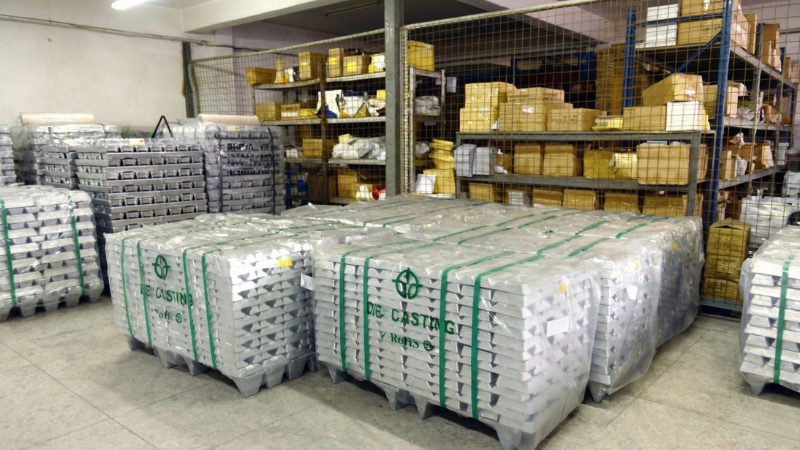
Not all aluminum die casting alloys are the same. The best choice depends on the part’s geometry, strength requirements, corrosion exposure, finishing needs, and cost targets.
Some commonly used alloys include:
A380
A380 is often considered a versatile aluminum die casting alloy. It offers a practical balance of castability, mechanical properties, and cost, It is widely used in automotive transmission housings, engine blocks, and electronic device enclosures.
A383 (ADC12)
A383, also known as ADC12 in many Asian markets, is often used when a part has more intricate geometry than A380 can easily handle. It provides improved die-filling characteristics, which makes it a strong choice for thin-wall components, precision housings, and complex electronic parts.
A413
A413 is commonly selected when excellent pressure tightness is especially important. It is often used for parts such as hydraulic components, pressure vessels, and intricate castings that require better sealing performance.
B390
B390 is known for its high hardness and strong wear resistance. It was originally developed for automotive engine blocks and is also used in valve bodies and sleeve-less piston housings where durability under wear is critical.
A360
A360 offers higher corrosion resistance, better elevated-temperature strength, and somewhat better ductility than some more common die casting alloys. However, it is also more difficult to cast, so it is usually selected for applications where performance matters more than casting convenience.
When selecting an alloy, it is best to evaluate the full project requirements rather than choosing based on material name alone.
Advantages and Limitations of Aluminum Die Casting
Like any manufacturing process, aluminum die casting offers both clear advantages and practical limitations. The table below highlights the main points buyers and engineers should consider.
Aluminum Die Casting Design Tips
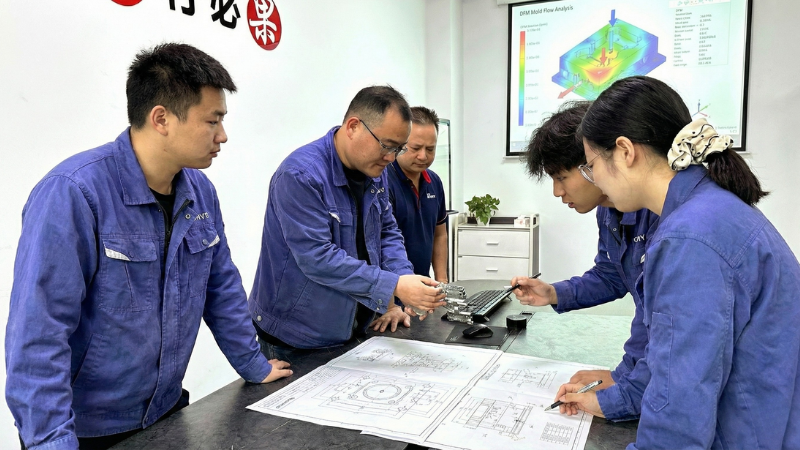
Good results do not depend on the process alone. Part design plays a major role in quality, cost, and manufacturability.
Here are a few practical design tips from Honjenny Engineering:
- Add Draft Angles: Draft helps the part release from the die more easily. Without enough draft, ejection can become difficult and tool wear may increase.
- Use Fillets and Radii: Sharp corners can create stress concentration and filling challenges. Smooth transitions usually improve both casting performance and part durability.
- Avoid Unnecessary Complexity: Complexity is one of die casting’s strengths, but unnecessary features can still raise tooling cost and increase process risk.
- Plan for Machining Only Where Needed: Critical holes, tight-thread features, or exact sealing surfaces may still require secondary machining. Designing with this in mind can improve both quality and cost efficiency.
Common Applications of Aluminum Die Cast Parts
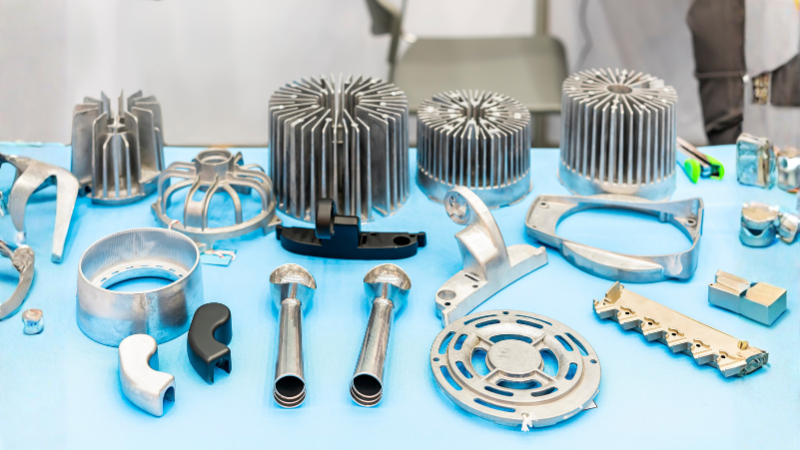
Aluminum die casting is used in many industries because it supports lightweight, repeatable, and durable component production.
Common applications include:
- Automotive Parts: Manufacturers use aluminum die casting for housings, brackets, covers, structural supports, and thermal management components.
- Electrical Components: The process is widely used for enclosures, connector housings, heat sinks, and protective covers.
- Telecommunications Equipment: Aluminum die cast parts are often used where dimensional consistency, durability, and thermal performance matter.
- Industrial Machinery: Covers, frames, pump housings, motor housings, and control system components are common examples.
- Consumer and Commercial Hardware: Many handles, locks, fixtures, and hardware components are produced through die casting because of the balance between appearance and efficiency.
Aluminum Die Casting vs. Other Casting Processes
Each casting process has its own strengths. In general, aluminum die casting is best suited to high-volume production where part consistency, thin walls, and production efficiency matter most.
When Is Aluminum Die Casting the Right Choice?
Aluminum die casting is often a strong fit when your project involves:
- medium to high production volume,
- consistent repeat orders,
- complex part geometry,
- lightweight performance requirements,
- and a need to control long-term unit cost.
It may be the right choice when you want to combine multiple features into one component and reduce downstream assembly work.
It may be less suitable when your design is still changing rapidly, your order volume is very low, or the part requires a process better matched to another material or manufacturing route.
How to Choose the Right Aluminum Die Casting Supplier
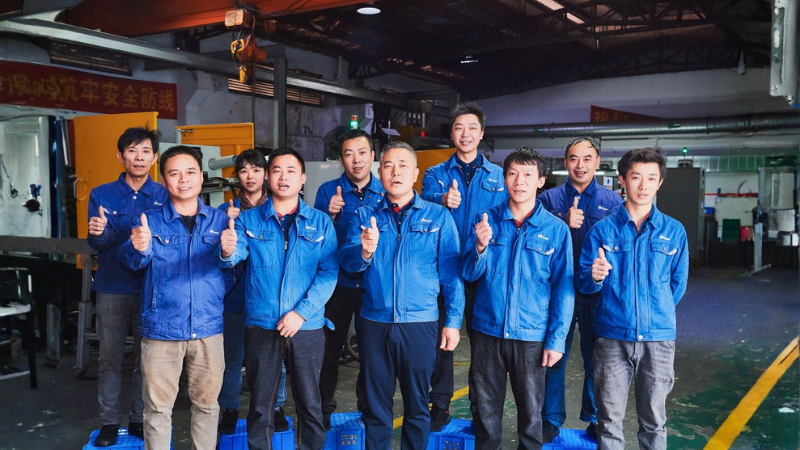
Choosing the right aluminum die casting supplier is about more than price. A strong supplier should help you improve manufacturability, control quality, reduce downstream cost, and support stable production over time.
Engineering and DFM Support
A good supplier should review your drawings early and provide practical DFM feedback before tooling begins. This matters because design decisions directly affect castability, porosity risk, tool life, and the need for secondary operations.
Tooling Expertise
Tooling quality has a major impact on tolerances, repeatability, part strength, and long-term production stability. For that reason, buyers should look for a supplier with proven tooling design and mold optimization experience, not just casting capacity.
Quality Control and Traceability
Do not just ask whether the supplier “checks quality.” Ask how quality is controlled, what inspections are performed, and what documentation can be provided, such as inspection reports, PPAP support, or material traceability.
Certifications and Process Discipline
Relevant certifications can help signal that a supplier follows structured quality systems. Depending on your market and application, it is worth checking whether the supplier holds standards such as ISO 9001 or IATF 16949.
Secondary Operations and Assembly Support
Many die cast parts still require machining, finishing, testing, or assembly. A supplier that can handle these steps in one program is often easier to manage and may help reduce handoffs, delays, and quality variation.
In practice, the right supplier should function as a manufacturing partner, not just a part maker. The goal is not only to produce castings, but to support better design decisions, stable quality, and long-term production success.
FAQs
-
What is the difference between cast aluminum and die-cast aluminum?
Cast aluminum is a broad term for aluminum parts made by any casting process. Die-cast aluminum is a specific type of cast aluminum produced by injecting molten aluminum into a reusable steel die under high pressure.
-
What is the difference between aluminum die casting and sand casting?
Aluminum die casting is generally better for high-volume production, tighter tolerances, and thinner walls. Sand casting is often more suitable for lower volumes, larger parts, and projects with lower upfront tooling budgets.
-
Can die cast aluminum be machined?
Yes, die cast aluminum can be machined when tighter tolerances or critical features are required. Many manufacturers use die casting for the basic part shape and machining for selected holes, threads, or sealing surfaces.
-
Can die cast aluminum be welded?
Die cast aluminum can sometimes be welded, but it is often more difficult than other aluminum products because internal porosity may affect weld quality. In many applications, machining, inserts, or design changes are preferred instead of welding.
Conclusion
Aluminum die casting is a highly efficient manufacturing process for producing lightweight metal parts with good repeatability, strong dimensional consistency, and complex geometry. It is widely used across industries because it supports both performance and production efficiency.
For the right project, aluminum die casting can reduce assembly steps, improve consistency, and lower long-term production cost. The key is understanding not only what the process is, but also when it is the best fit.
Before making a final decision, review your part design, annual volume, alloy needs, finishing requirements, and downstream performance goals. That approach will help you choose the manufacturing method that delivers the best overall value.
Get the Most Satisfactory Aluminum Die Casting Services with HONJENNY
At Honjenny, we help manufacturers turn part concepts into scalable production solutions. From tooling evaluation to final part delivery, our team supports customers who need reliable aluminum die casting for demanding applications.
Ready to evaluate your project? Contact us to discuss your drawings, production goals, and material requirements.